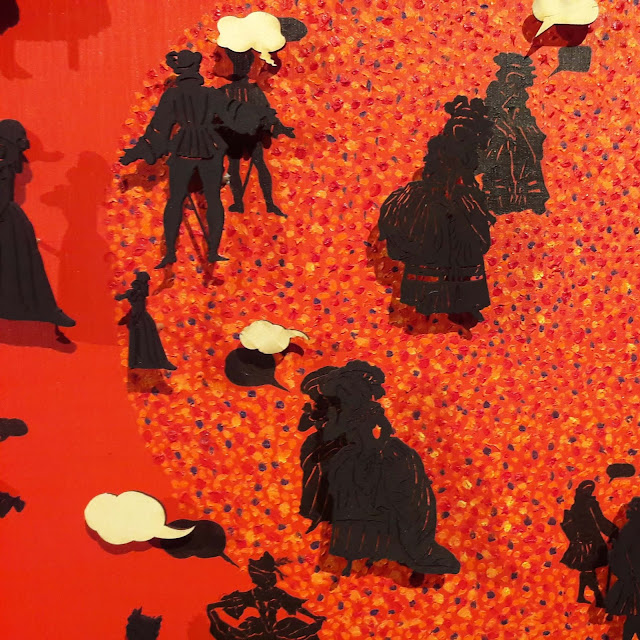



“People are asleep; when they die, they awaken.”
— A traditional Sufi aphorism
Dreams have always occupied a special place in my life. As a psychologist, I have come to regard them as one of the richest sources of meaning-making available to human beings. Dreams gather memory, desire, fear, grief, longing, and hope into symbolic narratives that often reveal truths inaccessible to ordinary consciousness. Whether one works within psychoanalysis, or contemporary relational traditions, dreams remain among the most intimate expressions of the human soul.
And yet, despite having grown up in Turkey—a culture profoundly shaped by Islam and centuries of Sufi thought—I knew remarkably little about the Islamic traditions of dream interpretation.
This realization arrived to me rather late in life.
Like many educated people of my generation, I inherited the geography of the East but the intellectual instruments of the West. Freud, Jung, Winnicott and Kohut among many others formed the conceptual language through which I understood inner life. My education cultivated a Western lens, even as my emotional and cultural world remained deeply intertwined with older traditions of the Orient.
I was, in a sense, raised at a crossroads while looking predominantly in one direction.

Annemarie Schimmel (1922-2003)
It was only recently that I discovered the work of Annemarie Schimmel and her remarkable book Die Träume des Kalifen: Träume und Ihre Deutung in der Islamischen Kultur. (Halifenin Rüyaları: İslam’da Rüya ve Rüya Tabiri), whose title may be rendered in English as The Dreams of the Caliph: Dreams and Their Interpretation in Islamic Culture. Reading Schimmel was a humbling experience. Here was a German scholar introducing me to dimensions of my own civilizational inheritance that I had scarcely encountered.

What impressed me most was not merely her scholarship, but the sympathy and depth with which she approached Islamic understandings of dreams. She did not treat them as curiosities from a vanished world but as expressions of a sophisticated and enduring philosophy of human existence.
As I read, I began noticing both profound differences and striking similarities between the psychoanalytic tradition—particularly in its Jungian form—and Islamic, especially Sufi, approaches to dreaming.
These differences, I believe, can be understood through three fundamental questions: ontology, epistemology, and methodology.
Ontology: What Is a Dream?
For modern depth psychology, dreams arise from the psyche.
Freud understood them primarily as disguised expressions of unconscious wishes and conflicts. Jung expanded this framework by introducing the collective unconscious: a transpersonal layer of the psyche populated by archetypes that belong not to the individual alone but to humanity as a whole. Certain images—the wise old man, the mother, the hero, the shadow, the sacred child—recur across civilizations because they emerge from a common psychic inheritance.
Dreams, therefore, connect us to something larger than ourselves.
Yet that larger reality remains fundamentally psychological.
Islamic and Sufi traditions make a more expansive claim. Dreams may indeed arise from ordinary concerns and desires, but they may also originate from spiritual realities that transcend the individual self. Classical scholars distinguished between dreams of divine origin, dreams produced by the ego, and disturbing dreams that should not be granted interpretive authority.
The Sufi notion of the imaginal world—alam al-mithal—suggests an intermediate realm that is neither material nor merely subjective. Symbols encountered in dreams are not simply products of the mind; they may be manifestations of a genuine mode of existence.
What Jung situates within the depths of the psyche, Sufi metaphysics often situates within the structure of being itself.
The famous sufi dictum, “İnsanlar uyur, ölünce uyanırlar”—“People are asleep; when they die, they awaken”—captures this worldview with extraordinary elegance. Ordinary waking consciousness may itself be incomplete. Dreams are not always departures from reality; they may occasionally constitute approaches to a deeper reality.
Epistemology: What Can Dreams Teach Us?
The second difference concerns knowledge itself.
Psychoanalysis generally understands dreams as pathways to self-knowledge. Dreams reveal hidden conflicts, forgotten memories, emotional truths, and possibilities for psychological integration. Even in Jungian psychology, where dreams connect us with archetypal realities, their ultimate purpose remains individuation: becoming more fully oneself.
The truth offered by dreams is fundamentally autobiographical.
Islamic traditions permit another possibility.
Dreams may communicate knowledge that exceeds the boundaries of individual subjectivity. They may provide moral guidance, spiritual insight, or symbolic glimpses of realities inaccessible through ordinary perception. This does not imply that every dream possesses revelatory significance. On the contrary, Islamic scholars developed subtle systems of discernment precisely because dreams vary in origin and reliability.
Nevertheless, the underlying assumption remains strikingly different from modern secular thought: human beings are not epistemically closed systems. Meaning may arrive from beyond the self.
The contemporary West readily asks, “What does this dream reveal about me?”
The Islamic tradition remains equally willing to ask, “What if this dream reveals something beyond me?”
Methodology: How Should Dreams Be Interpreted?
Differences in ontology and epistemology naturally produce different methodologies.
Modern psychoanalytic practice privileges personal association. Symbols possess meaning within the unique context of an individual’s life. A river, a house, a bird, or a mountain cannot be reduced to universal formulas. Interpretation emerges through dialogue and through the dreamer’s own network of memories and feelings.
Jung supplemented personal association with amplification, drawing upon mythology, religion, art, and comparative symbolism. Yet even here, the goal remained psychological understanding.
Classical Islamic and Sufi traditions combined personal context with inherited symbolic vocabularies refined across centuries. The interpreter was expected to possess not only intellectual knowledge but also ethical and spiritual maturity. Understanding dreams required understanding the dreamer.
Interpretation was inseparable from wisdom.
The dream was never merely a text to decode; it was part of a larger moral and spiritual journey.
What Might We Learn from the Sufis?
I do not believe these traditions are mutually exclusive.
Modern psychology has given us indispensable insights into trauma, attachment, development, memory, and unconscious life. It has taught us to respect the uniqueness of individual experience and to approach symbols with humility rather than dogmatism.
Yet the Sufi traditions offer important correctives to certain limitations of contemporary thought.
They remind us that meaning is not always self-generated. They invite us to cultivate receptivity alongside analysis. They suggest that symbols may possess depths that transcend purely psychological explanations. Most importantly, they insist that interpretation without ethical and spiritual formation remains incomplete.
The dream is not an object to be mastered.
It is an encounter.
Perhaps this is where Jung and the Sufis come closest to one another. Both resist the reduction of human existence to rational consciousness. Both affirm that the soul exceeds the boundaries of the waking ego. Both understand symbols as living realities rather than decorative metaphors.
And both recognize mystery as an essential component of wisdom.
Growing up in Turkey, I inherited two intellectual worlds. For many years, I inhabited one while remaining largely unaware of the other. Encountering Annemarie Schimmel’s work has been, in some sense, a homecoming—a rediscovery of questions that my own civilization had been asking for centuries.
Between the collective unconscious and the imaginal realm, between psychoanalysis and Sufism, there exists not merely a contrast but a conversation.
It is a conversation worth continuing.
For dreams still remind us of what daylight encourages us to forget: that human beings are larger than their explanations, that meaning often arrives in symbols rather than propositions, and that reality itself may possess dimensions more mysterious than our waking minds are prepared to acknowledge.