


On the seashore of endless worlds
Children play.’
Rabindranath Tagore
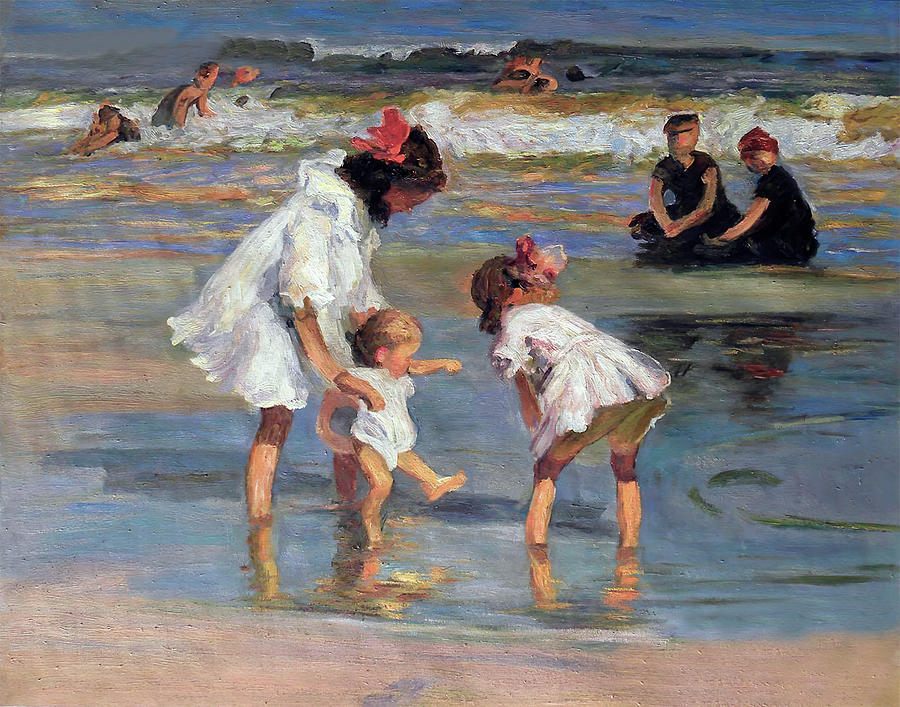
Children Playing at the Seashore by Edward Henry Potthast
When I first encountered Thomas Ogden’s notion of reverie, I was deeply curious and quietly frustrated. I read. I reread. I thought I understood it intellectually, yet something essential remained untouched. Reverie, Ogden suggested, was not something one did, but something one found oneself in: a field of experience co-created between analyst and patient, where unconscious meanings could take shape before being named. Still, reading did not quite open that door for me.
Understanding came differently.
In my recent therapy, after only four sessions, an image appeared not summoned, not analyzed, simply there. I imagined my therapist and myself as two young girls playing at the shore of the sea. We were light, gay, playful, sprinkling water at one another. There was laughter, movement, a sense of freedom. The deep sea was undeniably present, vast and full of depth but we were not rushing toward it. We were not diving in, not interpreting it, not conquering it. We were simply there, together, at the edge.
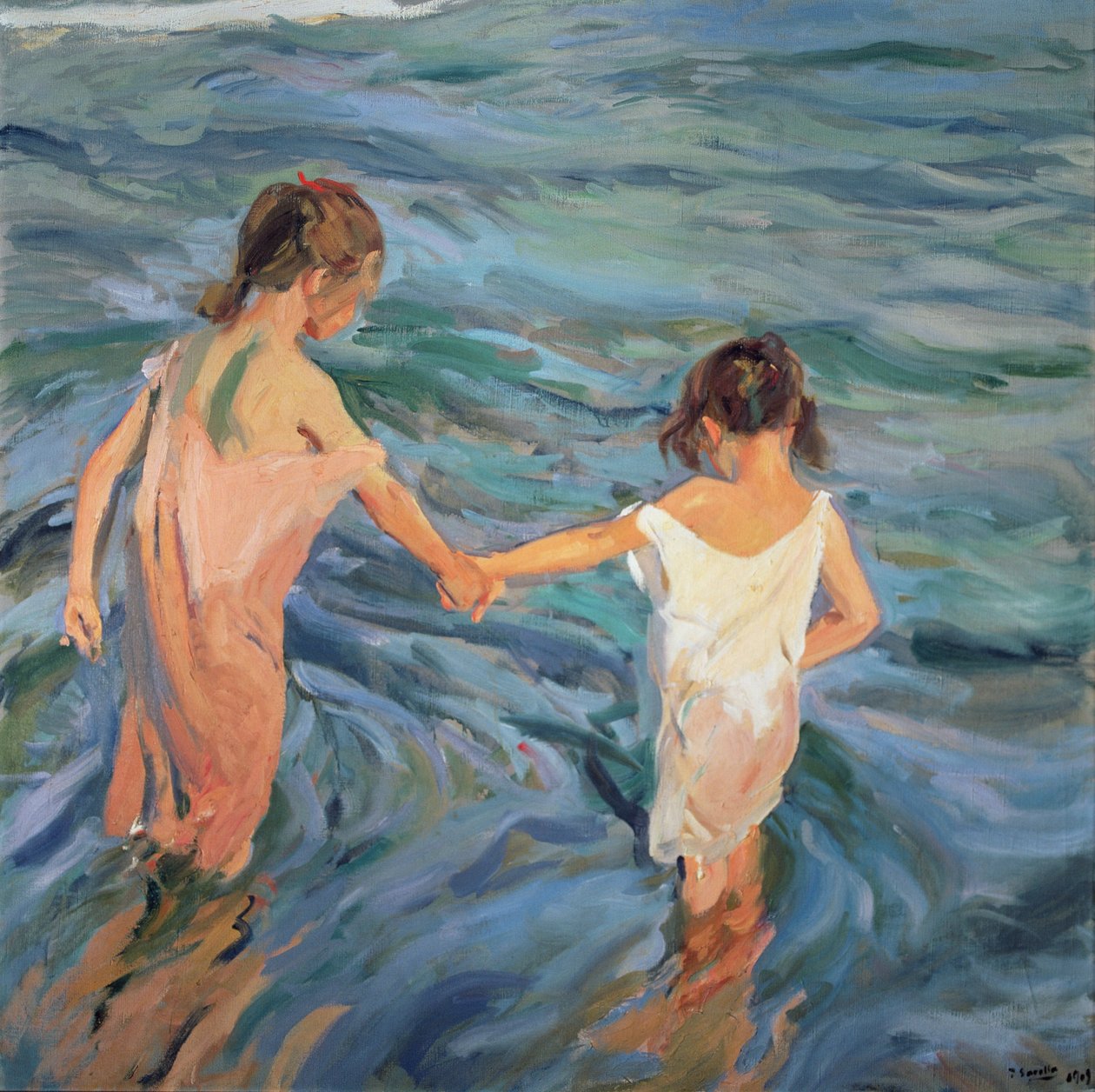
Children in the Sea, Joaquin Sorolla y Bastida
That image changed something fundamental in my experience of therapy.
What struck me was not only the content of the fantasy, but its quality. There was no urgency, no demand for insight, no compulsion to descend into trauma or meaning. Instead, there was aliveness, shared presence, and a tolerance for not knowing. The image carried a bodily sense of safety and play, an implicit agreement: depth exists, but it does not have to be forced. It will come when it comes.
Only later did I recognize this as reverie.
Ogden describes reverie as a form of dreaming that occurs in the analytic space, thoughts, images, bodily sensations, and affects that arise in the analyst and, I would add, in the patient as a response to the unconscious life of the analytic pair. Reverie is not interpretation; it is pre-interpretive. It is the psyche thinking in images before words arrive.
In that moment by the sea, something in me understood reverie not as a concept, but as an experience: a shared psychic play space where meaning is allowed to gestate rather than be extracted. The image did not explain anything. Yet it reorganized everything. It opened a new door in therapy, one where trust preceded depth, where play preceded pain, and where being together mattered more than understanding too soon.
Perhaps reverie cannot be learned by reading alone. Perhaps it must be lived, stumbled upon, dreamed into existence. Like standing at the shore, feeling the water touch your feet, knowing the ocean is there, deep, powerful, waiting while allowing yourself, for now, to simply play.