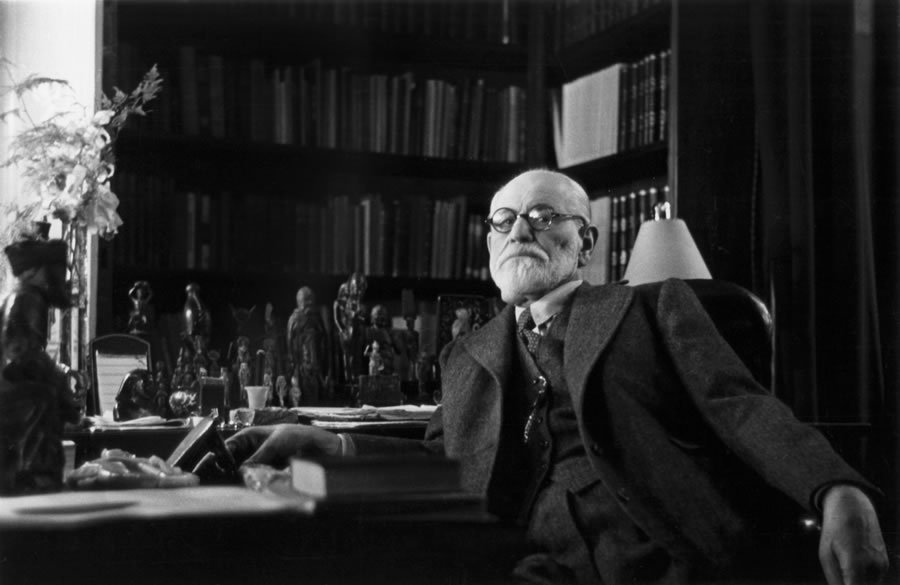



“All real living is meeting.”
― Martin Buber, I and Thou
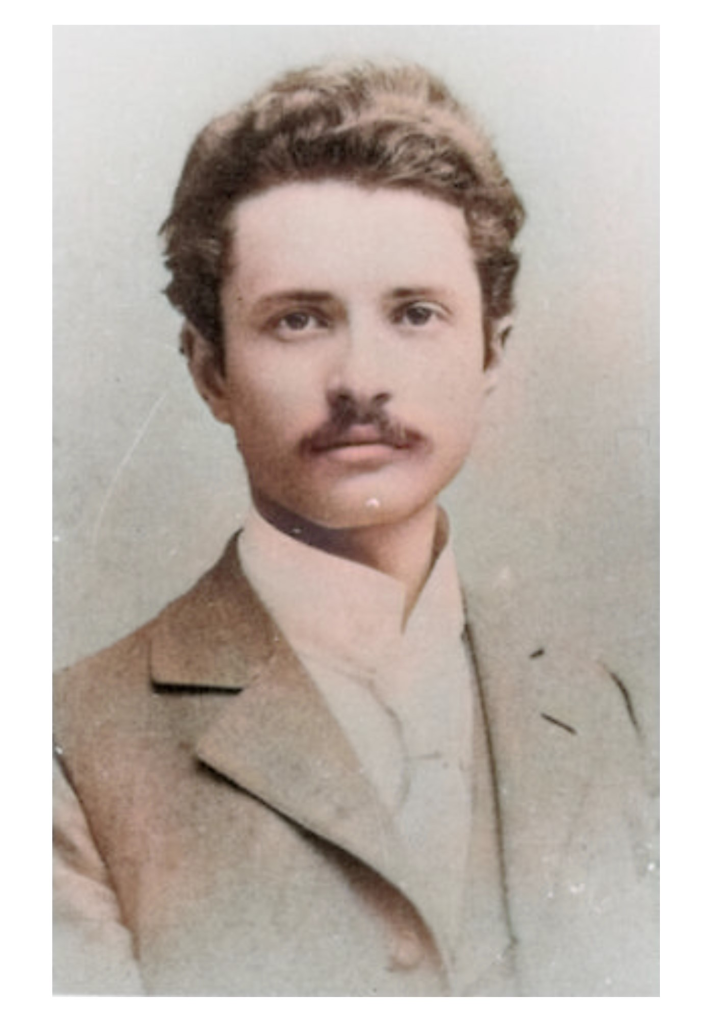
Martin Buber (1878-1965) as a young man (visual is taken from https://centrumjudaicum.de/)
As I continue my training in Integrative Psychotherapy, I often find myself tracing ideas backward—following concepts that seem entirely contemporary until they unexpectedly lead me to a philosopher writing a century ago. One such discovery has been Martin Buber. While reading about relational approaches to psychotherapy, I began to notice how often the language of presence, meeting, dialogue, and relationship echoed ideas first articulated not by a clinician, but by a philosopher.
Buber never developed a theory of psychotherapy. He was not interested in techniques, diagnoses, or treatment manuals. Yet his philosophy has quietly become one of the deepest currents flowing beneath many of the most influential psychotherapies of the twentieth and twenty-first centuries. Like a river that disappears underground only to emerge miles away, his thought resurfaces in Gestalt therapy, Integrative Psychotherapy, and, perhaps more surprisingly, in relational psychoanalysis—even though he remained one of classical psychoanalysis’ most penetrating critics.
The center of Buber’s philosophy is beautifully simple. In his 1923 masterpiece I and Thou, he argued that human beings encounter the world in two fundamentally different ways.
The first is the I–It relationship. Here we approach the world as something to observe, analyze, categorize, or use. This is the stance of science, technology, and much of everyday life. There is nothing inherently wrong with it. We need I–It relationships to diagnose illnesses, conduct research, formulate treatment plans, and understand psychological symptoms. But when another person becomes merely an object of explanation, something essential is lost.
The second is the I–Thou relationship. Here the other is no longer an object but a living presence. Rather than standing apart as an observer, we become genuinely open to encounter. We do not simply understand another person; we meet them. In Buber’s words, the “Thou” can never be reduced to a concept, diagnosis, or category. Every authentic encounter reveals a uniqueness that resists explanation.
Yet Buber was careful not to romanticize this way of meeting. The I–Thou relationship is not a permanent psychological state that one can deliberately adopt or sustain. Rather, it is a fleeting event—a moment of grace that cannot be manufactured. As soon as we begin to reflect upon it, analyze it, or translate it into concepts, we inevitably return to the necessary world of I–It. Even psychotherapy requires both modes. Assessment, diagnosis, note-writing, and theoretical thinking all belong to I–It. The therapist’s task is therefore not to remain permanently in an I–Thou relationship, but to cultivate a readiness for genuine encounter whenever it unexpectedly emerges.
Perhaps the most radical aspect of Buber’s philosophy is his belief that human beings do not first exist as isolated individuals who later form relationships. Rather, we become ourselves through relationship. Identity is not something fully formed inside us before we meet others; it emerges in dialogue. Long before attachment theory, and interpersonal neuroscience would make similar claims, Buber was already suggesting that relationship is not secondary to human existence—it is one of its very conditions.
This philosophical vision found one of its earliest psychological homes in Gestalt therapy.
Although Gestalt therapy is often remembered for dramatic techniques such as the empty-chair exercise, these methods tell only part of its history. From its beginnings, the philosophical foundations of Gestalt therapy were deeply influenced by Buber’s dialogical thought among other existential and phenomenological influences, particularly through Laura Perls who shared a profound appreciation for existential philosophy and genuine human encounter.
Ironically, it was Fritz Perls’ later demonstrations at Esalen in the 1960s—with their confrontational style, dramatic experiments, and theatrical interventions—that came to define Gestalt therapy in the public imagination. The relational and dialogical heart of the approach was often overshadowed by its techniques.
Beginning in the 1980s, Gestalt scholars such as Richard Hycner and Lynne Jacobs sought not so much to reinvent Gestalt therapy as to recover one of its original philosophical foundations. Drawing explicitly upon Buber, they articulated what became known as Dialogical Gestalt Therapy, emphasizing presence, inclusion, confirmation, and mutuality. Healing was understood to emerge not primarily through clever interventions but through the quality of the meeting between therapist and client.
It is difficult to read Richard Erskine’s Integrative Psychotherapy without hearing these same echoes.
Erskine rarely begins with interventions. Instead, he speaks of inquiry, attunement, involvement, and presence. His therapeutic philosophy rests on the belief that many forms of psychological suffering originate not simply from intrapsychic conflict but from repeated failures of relationship. Healing therefore occurs through a new relational experience in which the client feels deeply understood, emotionally accompanied, and psychologically held.
Inquiry, in Erskine’s hands, is not interrogation but respectful curiosity that invites the client’s subjective world to unfold. Attunement involves entering the client’s emotional rhythm rather than merely observing it. Involvement asks the therapist to remain emotionally available rather than retreating behind professional neutrality. Presence is not simply attentive listening; it is offering one’s full psychological availability.
One can almost imagine Buber smiling at this language. Erskine’s therapeutic relationship is not merely the vehicle through which techniques are delivered; it is itself a primary source of transformation.
Buber’s influence did not stop with Gestalt therapy. It also entered the broader landscape of humanistic psychology through his famous 1957 dialogue with Carl Rogers at the University of Michigan. Their conversation remains one of the most remarkable encounters between philosophy and psychotherapy.
The two men agreed on much. Both believed that healing required authenticity, dialogue, and genuine human presence. Yet Buber gently challenged Rogers on an important point. While Rogers emphasized authenticity and deep person-to-person encounter between therapist and client, Buber argued that psychotherapy can never become a completely symmetrical relationship. The client comes seeking help; the therapist bears a unique ethical responsibility. Genuine dialogue is certainly possible, but the therapeutic relationship remains asymmetrical in ways that ordinary friendships are not.
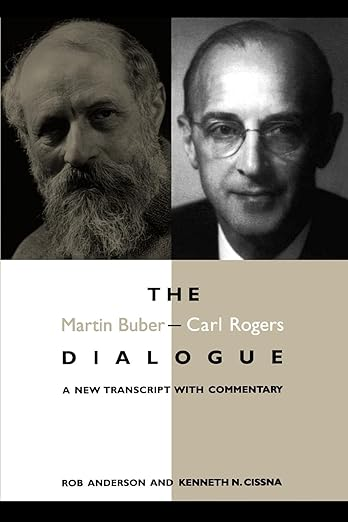
For those interested in the remarkable encounter between these two great minds, this is a must-read. Please note that the cover image is from Amazon.co.uk.
This distinction continues to resonate across contemporary relational therapies, reminding us that authenticity need not erase professional responsibility.
Perhaps the most intriguing chapter of Buber’s legacy concerns relational psychoanalysis.
Historically, Buber was deeply critical of classical Freudian psychoanalysis. He worried that psychoanalytic interpretation could transform a living person into an object of explanation. The analyst, hidden behind neutrality and interpretation, risked relating through what Buber would have called an I–It stance rather than an I–Thou encounter. His criticism was directed less at the exploration of the unconscious than at any therapeutic relationship in which dialogue became subordinate to explanation.
Ironically, psychoanalysis gradually evolved in a direction that brought it remarkably close to Buber’s vision.
This influence was rarely direct or linear. Rather, Buber’s philosophy entered the intellectual atmosphere through existential thought, phenomenology, dialogical philosophy, interpersonal psychiatry, and object relations theory before eventually finding expression in relational psychoanalysis.
Stephen Mitchell’s claim that the mind is constituted in relationships rather than existing as an isolated psychic apparatus bears an unmistakable family resemblance to Buber’s philosophy. Jessica Benjamin’s influential concept of mutual recognition—the capacity to recognize another person as an independent center of subjectivity while remaining fully oneself—has often been acknowledged as drawing inspiration from Buber’s dialogical philosophy. Lewis Aron emphasized the mutual influence of therapist and patient rather than the analyst’s detached neutrality, while Donna Orange’s writings on dialogue, hospitality, witnessing, and ethical responsiveness often resonate strongly with Buber’s thought.
These thinkers did not simply adopt Buber’s vocabulary. They extended many of his philosophical intuitions into the complex clinical realities of transference, enactment, attachment trauma, unconscious communication, and intersubjectivity.
There is a beautiful irony here.
Buber criticized psychoanalysis because he feared it reduced persons to objects of explanation. Yet over the course of the twentieth century, psychoanalysis itself underwent what has often been called the relational turn. The image of the analyst as detached expert gradually gave way to one of a participant-observer whose own subjectivity inevitably enters the therapeutic relationship. While relational psychoanalysis remains unmistakably psychoanalytic, its emphasis on dialogue, mutual influence, recognition, and ethical encounter often brings it surprisingly close to the very vision Buber believed classical psychoanalysis had neglected.
Seen from today’s perspective, Buber’s influence extends far beyond any single school of psychotherapy. Attachment theory describes the infant becoming a self through relationship. Intersubjective theories explore how minds emerge between people rather than inside isolated individuals. Contemporary neuroscience increasingly demonstrates that emotional regulation is profoundly interpersonal. Across these diverse traditions runs a common thread: human beings are fundamentally relational.
Buber anticipated this movement decades before psychology possessed the empirical language to describe it.
Perhaps that explains why I and Thou continues to feel remarkably contemporary. In an age increasingly fascinated by protocols, outcome measures, and evidence-based interventions, Buber quietly reminds us that healing cannot be reduced to method alone. Techniques matter. Theory matters. Research matters. Yet beneath every successful psychotherapy lies something older than any school or technique: those rare moments when two human beings genuinely meet.
Buber would probably remind us that such moments cannot be manufactured.
They can only be welcomed.
And perhaps that is precisely why they possess the power to heal.
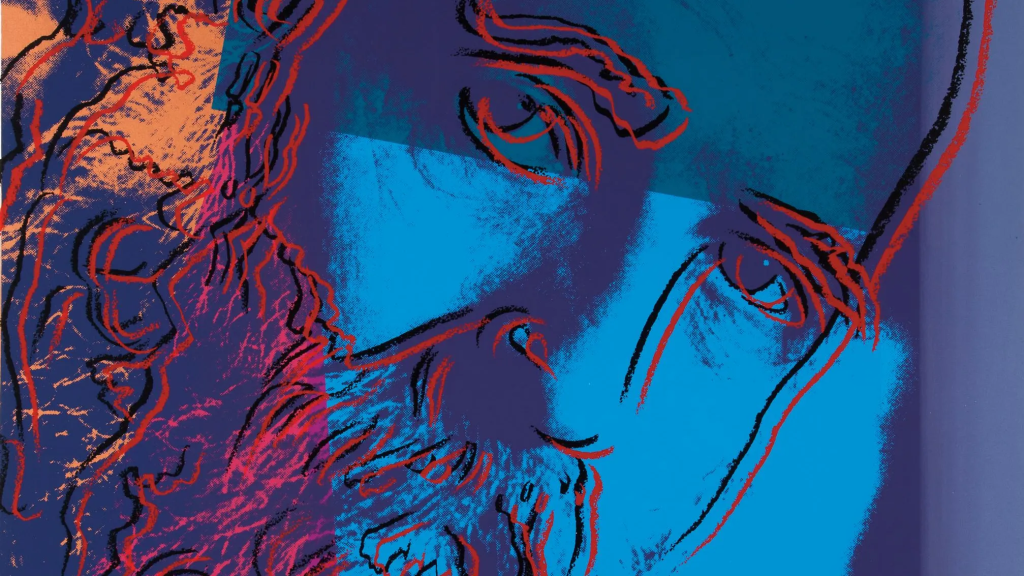
Martin Buber visual is taken from NY Times
For further reading:
- Anderson, R., & Cissna, K. N. (1997). The Martin Buber–Carl Rogers Dialogue: A New Transcript with Commentary. State University of New York Press.
- Buber, M. (1970). I and Thou (W. Kaufmann, Trans.). Charles Scribner’s Sons. (Original work published 1923).
- Erskine, R. G. (2011). Attachment, relational-needs, and psychotherapeutic presence. International Journal of Integrative Psychotherapy, 2(1), 10–18.
- Friedman, M. (1985). The Healing Dialogue in Psychotherapy. Jason Aronson.