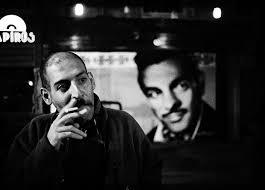



He is always present, everywhere. The Creator is always everywhere. If you do what He commands and refrain from what He forbids, you become a good person in this world and find peace in the next. But it didn’t work. It doesn’t. The devil is always there. Perhaps the devil we speak of is, in fact, ourselves.’
Muharrem’s words from the film Takva

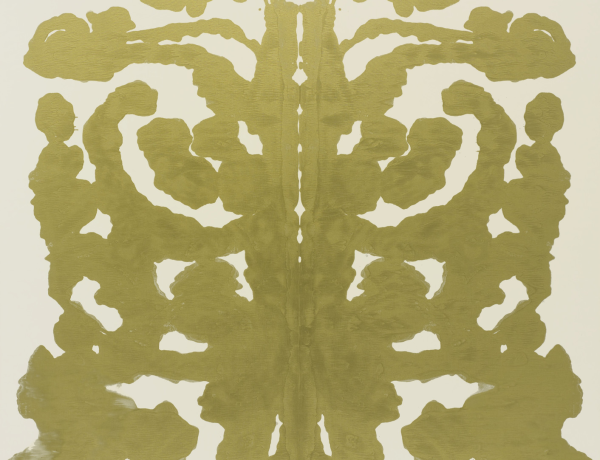
Painting by Alba Hodsoll
I find myself repeatedly astounded by the sexual scandals within strictly regulated religious communities, both in the Catholic Church and various Islamic sects. In this article, I will explore how the psychoanalytic concepts of repression and foreclosure can help us understand the psychological mechanisms behind these transgressions.
Sexuality is one of the most tightly regulated aspects of human experience, and religious communities often impose strict moral codes to govern it. In psychoanalytic terms, sexual desires that fall outside socially sanctioned norms can interact with deep-seated psychic mechanisms like repression and foreclosure, producing both psychological tension and moral anxiety. Exploring these dynamics sheds light on the complex interplay between individual sexuality and institutionalized morality in religions such as Catholicism and fundamentalist Islam.
Repression
Repression is the unconscious pushing away of thoughts, desires, or impulses that the individual finds unacceptable. In religious contexts, sexual urges that contravene doctrinal rules are prime candidates for repression.
A Catholic seminarian experiencing erotic attraction to the same sex may repress these feelings because they conflict with vows of celibacy and Church teachings. Similarly, a young man in a conservative Islamic community might repress sexual fantasies that fall outside marital or socially approved sexual behavior. Repressed sexual content doesn’t disappear; it often emerges indirectly as anxiety, guilt, dreams, or even ritualized behaviors. In some cases, repressed desires may intensify precisely because they are taboo, creating a cycle of shame and secretive expression. Repression allows the person to maintain symbolic coherence within the moral order, they consciously conform to rules, even as unconscious drives persist. Psychoanalytically, these drives can be accessed and interpreted in therapy, allowing integration rather than suppression.
Foreclosure
Foreclosure (Lacanian “forclusion”) is more radical than repression. Here, a psychic element is excluded from the symbolic order entirely, it never enters the network of meaning that organizes the subject’s psyche.In highly rigid moral frameworks, certain sexual thoughts or interests may be treated not merely as sinful, but as nonexistent or unthinkable. For instance, explicit acknowledgment of homosexual attraction is utterly foreclosed in both Catholic and fundamentalist Islamic contexts: it is socially, morally, and institutionally denied, leaving no symbolic space for processing.
Foreclosed sexual elements tend to manifest in extreme, sometimes psychotic ways, or through compulsive behaviors because the psyche cannot integrate them. Unlike repression, foreclosure creates a structural gap, the desire is not only hidden, it is excluded from recognition.

The film Takva is a striking example of how foreclosed sexuality can manifest in certain Islamic communities. In Takva, sexuality is never represented as a wish. It appears as something alien, invasive, and catastrophic, as if it does not belong to the psychic order at all.
Muharrem seems to lack a symbolic place for sexuality from the outset. There is no internal negotiation (“I desire but must not”); instead, desire erupts as raw bodily excitation linked immediately to terror, guilt, and annihilation. This is characteristic of foreclosure: what was never inscribed in the symbolic returns in the Real, not as fantasy but as intrusion.
His dreams are therefore not compromises between wish and censorship, but breakdowns of meaning, sexuality arrives without mediation, collapsing into violence and psychotic anxiety. The sect’s discourse provides moral law, but not symbolic articulation of desire, leaving no psychic container for it.
Interaction Between Sexual Desire and Religious Morality
Religious communities amplify the effects of repression and foreclosure.
Moral Prohibition Intensifies Repression. Behaviors considered sinful (fetishes, masturbation, same-sex desire) are repressed to preserve moral identity. The individual experiences shame and internal conflict, often without a safe space for exploration or therapy.
Absolute Moral Bans Lead to Foreclosure: Desires viewed as unthinkable or utterly forbidden may be foreclosed. For example, homosexual impulses are not only socially condemned but denied in public discourse, creating a psychic “blind spot” that can manifest unpredictably.
Ritualized Behaviors, Transgressions and Secretiveness: Repression can produce ritualized practices, compulsive confession, or excessive religious observance as unconscious expressions of desire. Foreclosure, being more radical, may contribute to extreme secrecy or covert acting out, sometimes resulting in scandal when institutional control fails. Sexual energy considered sinful or forbidden migjt be unconsciously redirected toward those over whom the individual holds power, frequently children, who cannot resist or expose the transgression. This dynamic is evident in both Islamic sects, where repressed desire contributes to secretive moral crises, and in the Catholic Church, as shown in films like Spotlight or Deliver Us from Evil, where systemic abuse reveals the tragic consequences of internalized guilt and institutional silence.
Psychoanalytically, these acts can be understood as the outcome of repression and foreclosure: the psyche, unable to symbolize or integrate forbidden desire, seeks an outlet in vulnerable others, turning personal prohibition into social harm. Across both religious frameworks, the abuse of power and the displacement of sexuality highlight how repression and foreclosure, when enforced by dogma and secrecy, can manifest in profoundly destructive ways.
Final Thoughts
Ultimately, examining sexuality through the lens of repression and foreclosure reveals how rigid moral codes and institutional secrecy can transform natural drives into hidden tensions or, tragically, into harmful actions toward the vulnerable. By acknowledging these dynamics, we gain a deeper understanding not only of individual suffering but also of systemic patterns of transgression in religious communities. Such insight calls for approaches that balance respect for spiritual frameworks with a compassionate, psychologically informed response, fostering spaces where desire, morality, and human vulnerability can coexist without fear or concealment.
note on the visuals: painting by Alba Hodsoll.
® Mahan Doğrusöz, 2025