



Mahan Doğrusöz: In Drama of the Gifted Child, Alice Miller talks about how the wounded child is motivated to become a ‘healar’. We see the same theme in the famous American novel, The Catcher in the Rye where the motivation to become the ‘Catcher’ is founded on one’s fall. What do you think drives one into a profession like psychotherapy, especially psychodynamically oriented psychotherapy where it is always essential to be in touch with one’s own depth? I ask this question because I have always wondered why would anyone be willing to stand up to such a big challenge of working with countertransference that has the potential to shake one’s own psychological foundations?
Kyd Shepherd: I think that is a very pertinent question. One that all therapists should ponder upon. I do think that becoming a ‘ healer’ always has a deep meaning for the therapist as none of us choose this profession at random. The most common reasons I have seen are: a desire to heal yourself through the patient i.e. healing by proxy. Often a way of making childhood ‘wrongs’ into something ‘right’. Secondly, A deep identification with a therapist. Interestingly enough when we experience therapy in a deep and meaningful way, we take a bit of the therapist with us, that part can then become a positive imago that helps us desire and seek to become like the therapist. Thirdly, there are also some other reasons that can ‘push’ someone into becoming a therapist like a deep drive to know what is happening in the other’s mind, a will to understand the intricacies and how they come about. An ‘epistemological drive’ as we would call it. Another one is making a positive difference in the world and regaining a form of agency through one’s work. A way of using power as defined by Rollo May in power and innocence, a capacity to impact the world. We should not forget the unconscious drives. Yes all the reasons I have exposed come with their unconscious underpinnings that can vary but as they are less easily shared, they remain hidden. Like exercising authority on others like an abusive parent on a child, wanting to be ‘loved’ and expecting gratitude from the patient… as stated previously, they can be many reasons but there is always a hidden aspect to our conscious altruism.
With regards to countertransference, I believe it to be an absolute necessity as it gives us the tools to navigate the relationship with the patient and our own experiences during the therapy. However, you are right this can shake our psychological foundations but if the therapist has been analysed, they should at the very least be aware of a decent number of foundations and internalised the rules, boundaries and settings of therapy. I think one of the main reasons why we take the dive in using countertransference is the fact that if analysed, it turns our mind from ‘obstacle’ to a lighthouse in the treatment of the patient. In a way we aren’t fighting our thoughts, feelings and representation, we are experiencing them and analysing them to understand and help the patient both by providing insights and reliving a shared emotional experience i.e. projective identification and surviving the ordeal.
And finally, I think we are in touch with the depths of our minds because as scary as it might sound it is also a path that is worth walking both personally and professionally.
Mahan Doğrusöz: What do you think must be the core human qualities of a psychotherapist and on the other hand what are the ‘vices’ of psychotherapists you commonly observe?
Kyd Shepherd: I think the core qualities must be to truly listen to another human without projecting onto them a value system, stereotypes, the therapist’s imagos -both positive and negative-… In other words let the person in the office be who they really are and listen to them. I also believe one core quality of a therapist should be their genuineness within the therapeutic setting. This authenticity isn’t about self-disclosing but more about openness to learn from the patient and accept the change they cause in us. It also means answering their questions and not ‘hiding’ behind the persona of the mental health professional. Patients often benefit from the realness of the therapist as it allows them to be true to who they are. However, this trueness must be in service of therapy and abide by rules of the setting. As all relationships are implicitly or explicitly defined by a set of rules and boundaries. According to me a core quality of the therapist is to admit to the limitations of their methods, model and analysis. Even if we often present our findings in a definitive way, these methods are based on hypothesis and thus are not absolute truths but approximations of the truth. A good therapist knows this and they know that the patient shouldn’t be ‘boxed into’ a narrow theory. Adding to the previous point, a good therapist shouldn’t be afraid of admitting errors or lack of knowledge as this openness often helps the therapeutic process. Humility is always a plus in this profession. An other point is a willingness to learn and grow with each patient and not ‘merely’ provide treatment as a medical doctor would prescribe medication.
Now in regards to the ‘vices’ as you call them, the main ones I have witnessed are an illusion of grandiosity in which the therapist feels that they have the ‘ultimate true answer’. This arrogance is often what divides our profession and can cause patients to lead into compliance rather than finding their own personal and creative answers to their issue. Also I have seen this behaviour in all schools of thought from psychoanalysis to CBT. And to me it is one of the worst aspects of the field. I have also witnessed some colleagues’ refusal to explain or share knowledge with other professionals that work with the same patient. For example they might say during an institutional meeting: ‘ it is a negative hallucination’ and not explain what it means or worse say: ‘it is the foreclosure of the name of the father’ and refuse to elaborate even if others insist. An attitude I personally find repugnant. There is also the case of psychologists justifying bad behaviour or greed for ‘theoretical’ reasons. I have also witnessed some psychotherapists’ indulgence in their feeling of hate towards a patient without engaging in countertransference and even worse sometimes rejecting any form of elaboration on these feelings. So to be clear intense feeling do occur in our work but it is our job to try and analyse what is happening and the refusal to think about it is one of the worst vices. But on the whole these bad behaviours are relatively rare and most therapists are competent and wonderful people.
Mahan Doğrusöz: What are the challenges of being a young psychotherapist who is psychodynamically oriented? What are the challenges in the training phase as well as the challenges of being ‘the’ therapist?
Kyd Shepherd: I think there are multiple challenges in being a young psychodynamic/ psychoanalytic psychotherapist. Training institutions can be very rigid in how they teach knowledge to students and ideas that are interesting and outside the ‘box’ are rejected or even depreciated by some institutions and teachers. In a way it is as if there was a right and wrong answer about the mind. When truth be told it is more about what helps you think is worth it. The other struggle of this mentality is that it crushes the creativity of students and pushes them to emulate a rigid and old framework that doesn’t work well in our contemporary society. It also creates ‘gate keepers’ that protect the dogma rather than seek clinical applications and innovations. I can only imagine how many students were discouraged or hurt by this system and how many were lost or turned against the whole discipline of psychoanalysis. But this needs to be nuanced as some teachers and institutions are open to change and challenging ideas.
Now as a psychodynamic therapist I would say that one of the main challenges in multidisciplinary teams is to get our point across in regards to the dynamics of the mind without using technical jargon and without compromising our ideas. Also standing up for the patient’s psyche in a mental health care system increasingly absorbed by scientism i.e. the belief that our suffering is purely biological, neurological in nature and that science will provide the answer and way to heal. Needless to say, that I disagree with this perspective I think our suffering is due to a multitude of factors that cannot be reduced to a chemical imbalance in the brain. And sometimes it can be challenging to work with different theories, ones that are not as materialistic. Also, some managers may feel it is ‘easy’ to be a psychologist and start presenting their opinions as psychological facts. This can be dangerous as there is no backing to these ideas and they can hurt patients. I feel those opinions masquerading as fact should be challenged by the psychologist.
In regards to our work with patients, the beginning can be complicated as the psychoanalytic therapists need to accept the uncertainty of interpretations, transference and countertransference…This acceptance can be a struggle as we start to develop our own idiosyncratic style of therapy which might clash with what we were taught and we might not know if it is the right thing to do. Also on an economical level, the first years of practice can be complex to navigate.
Mahan Doğrusöz: How does a therapist ‘restore’ himself/herself after exposure to so much traumatic psychological material? This is a very personal question because one of the main reasons I have avoided going down the path of becoming a psychotherapist for a very long time was my fear of being overwhelmed by the darker side of human experience.
Kyd Shepherd: It is a very important question and I will answer you with my own clinical experience. I have found over the years that being overwhelmed by the negative human traits to be relatively rare. I know that a lot of people think that psychotherapy is done at the expense of the therapist as if it was eating away at them but the truth is that we aren’t that easily subdued by the negative feelings because we actively work with the patient and often we can both make a difference in the lived experience. We are not passively waiting; we are trying to help the patient heal. The fact that we are trying creates this sense of agency and meaning that is so deep that it works as a safety net for both parties. Also, I will add that having been in therapy for many years now I am capable of preventing most emotions from overwhelming me even in desperate situations, I try my best and most of the time it makes a difference as subtle as it might be. Also, I have found that supervision and intervision are wonderful ways of getting help. And of course, taking care of oneself is essential.
Mahan Doğrusöz: I have been impressed by your willingness to share your knowledge and views on psychoanalytic literature and theory. What led you to open up the ‘talking psychology’ channel on YouTube and how did the experience shape you along the way?
Kyd Shepherd: It’s a funny phenomenon as I and started out with another channel that analysed fictional characters with a psychoanalytic lens but I couldn’t keep the upload pace. In regards to ‘ talk psychology’ I had the idea of a sharing my knowledge for a long time. I had the daydream during my studies but I didn’t feel legitimate to start it up until fairly recently which is two years ago when I realised that I acquired a number of clinical skills and theoretical knowledge that could benefit others, also the desire to share and communicate became increasingly strong within me. The final push was an interview I did with ‘Mind Matters’ on their podcast ‘A step towards help’ that I really enjoyed doing. This channel has changed me in many ways. It helped me open up to other people. You wouldn’t necessarily guess it but I am quite reserved in real life and I talk very little so talking psychology has made me more confident in my self-expression and I interacted with wonderful people including you of course. And I have had the honour of being thanked by some of the authors and theoreticians I have worked on, which is an incredible experience. So, it has changed me for the better!
Mahan Doğrusöz: Freud’s time was a time of hysteria in which body&desire was severely controlled and the world has radically shifted till his times. Which psychopathologies -do you think- dominate our ‘own times’? Do you think we are still living in the time of narcissism as Kohut had observed or have we headed towards a different pathological path?
Kyd Shepherd: Thank you for asking. I have been pondering this question ever since I read Love and Will written in 1960 by Rollo May. In the first chapter, he explains that the world was shifting from a neurotic to a schizoid world of isolation. And this question has stuck with me and my answer has changed. At first I indeed thought we were in the narcissist period but the more I thought of it, the less it felt true. I now believe the pathology that dominates is ‘dissociation’ as we are more and more cut off from our experiences, we seek to run away from our life be it by drugs, alcohol or more frequently by binge watching TV, compulsive buying, playing games, social media…This is more than escapism or daydreaming. it is a way for humankind to ignore, deny the horrors and tragedies occurring in the world but also in our lives, we are numbing the pain of existence and replacing it with a form of pseudo existence. Please note that this is my opinion and perspective and not an absolute truth. A pseudo existence filled with avatars and quick rewards. In a way our inner lives and external live are being filled in by idealised images and expectations. A form of dissociation that I believe is a protection against deep anxieties such as global warming, the violence of late stage capitalism, and the slow and dreaded decline of the illusion of a better future. As such I believe that our collective narcissism is a desperate attempt at maintaining the dissociation and preventing the painful insight. However, I must say that dissociation only works for so long as there is always a part of the psyche that seeks reunion of the ego despite the suffering. And more and more people are acting to change our system and society and even through social media and the internet. Another part of this dissociation is the splitting between ‘good’ and ‘bad’ that is becoming more and more rigid and less and open to nuance. As dissociation doesn’t allow for a complex and subtle understanding of the situation either it is good and helps maintain the dissociative state or it is bad and risks breaking down this mechanism and need to be rejected or ridiculed.
Also, I should point out that this isn’t a criticism of the technology but of our use of it.
Mahan Doğrusöz: What do you think psychoanalysis and psychodynamically oriented therapy have to offer the people of the 21st century where most people are looking for quick fixes and fast paced solutions?
Kyd Shepherd: I think psychoanalysis offers a true alternative to our contemporary world’s ideology. As it isn’t about the quick fixes, the easy solution, the panacea. Psychoanalysis is about questioning oneself relentlessly and forsaking our comfortable illusions and certainties on ourselves and the world. It is also an earnest tentative to discover our genuineness in a world that constantly perverts our idea of true self to ‘sell us’ products to display our ‘uniqueness’. Psychoanalysis is the hard path one that the patient has to choose and walk without guarantee or recipes for success. But it is real in a way that few things are. We become real to ourselves, our analysts and others. We change through these conversations, discover who we are and how different we are from the egosyntonic persona we built. We learn how to trust, love, take responsibility, endure tragedy, accept death and powerlessness and find meaning. In three words : rekindling our humanity. So yes it doesn’t sit well in our society in which the pleasure principe is king, it is a difficult path but it can deeply change us in a way that an easy fix could never do in my opinion.
Mahan Doğrusöz: I have never fully grasped what French psychoanalysts are saying as I had my formation in the Anglo-American tradition and read in English. I could never create a link between their theories and contemporary psychoanalytic theories that dominate the English-speaking world. What do you think French psychoanalysts have to offer to psychoanalytic thinking of our time and how they can really join the conversation?
Kyd Shepherd: Let me start by saying that you are by no means an exception in this regard many people have a hard time understanding French psychoanalysis including French psychotherapists. It is unfortunate as I believe they have a lot to offer psychoanalysis. I can see four major contributions. First of all, the perspective of desire, identity and reality. That has been worked on by the Lacanian school. It is very complicated but the insights developed by the Lacanians can be very helpful in dealing with the feelings of emptiness, lack of personal desire in a patient. This perspective can also be used in philosophical reflections. However, this perspective isn’t easily integratable as the Lacanians reject the English-speaking schools of psychoanalysis and most of their ideas like countertransference and borderline personality to name but a few. Integration would I think require theoretical compromise which the Lacanians aren’t prepared to do yet. Secondly, the perspective on the mind body problems with the Paris school of psychosomatic. They have a lot to offer in terms of understanding the affects of the mind on the body. They have developed an intriguing set of theories and concepts that are very unique. Examples would be operational thinking and normopathy. However the founders Pierre Marty, Michel de M’uzan, Michel Finn and Christian David are notoriously difficult authors that need an attentive read and reread to truly understand. I think that they could easily be integrated if their theories we more ‘streamlined’ and had gotten more translations. Thirdly, institutional psychotherapy a branch of psychoanalysis that postulates that intuitions such as groups for professionals, hierarchical reorganisations can also become sick and dysfunctional and that they need care as well. This movement was pioneered by Jean Oury an analyst and psychiatrist. It is the French version of the 1960’s English Antipsychiatry. Last but not least the question of disability in psychoanalysis. It is one of those subjects that most analysts don’t tackle as disabilities tends to be physical in nature but they have psychological impacts on both the individual and the family. An impact that has been studied by analysts such as Simone Korff Sausse, Maurice Ringler, Caroline Demeule and Marco Araneda.
Mahan Doğrusöz: What would you like to advice to young psychotherapy candidates who want to go into the field of psychotherapy, especially psychodynamically oriented psychotherapy?
Kyd Shepherd: Yes I have a couple of advice I would give to any young psychotherapist : pursue your personal interests in the field. As it is a wonderful job and there are many areas that can be explored for example: child psychology, couples’ therapy, psychotherapy for people experiencing psychosis…What is important is for you to find what ‘clicks’ and to enjoy your clinical work. They will be hard and complicated moments in your professional life and that is ok. We have all experienced them. There is no shame in asking for help from a colleague, a supervisor or a friend who is a mental health professional… having a professional support network is essential. Don’t forget your creativity! It is easy to lose touch with it during training but please never forget that It is our collective creativity, yours included that drive the discipline forward and whoever you are, I am sure you have something interesting to bring to the table. We aren’t all powerful and it is ok to fail as long as you did the best you could, given the circumstances. Some patients won’t grow better and it isn’t always the fault of the therapist or the method but the unconscious force at play. And we cannot help people that don’t want to be helped. It is good to remember that you are more than ‘just’ a therapist. You are a person with a life outside the practice. A life it is important to take care of and cherish.
I also would recommend Irvin Yalom’s excellent book : The gift of therapy as it presents a good baseline for being a psychotherapist. You are legitimate in questioning models and theories. No metapsychological model should be considered sacred and flawless. Keep your critical eye open as it will help you find the tools you are comfortable working with. I personally believe that you must experience psychoanalytic psychotherapy as a patient to be the best possible clinician. As this experience will give you a clear understanding of the job and will allow you to explore your mind in a deeper way that self-analysis as the psychotherapist will help and guide you in unexpected ways!
Thank you so much for reaching and I would like to thank you for this interview and these very interesting questions!
Mahan Doğrusöz: I thank you for taking the time and effort to participate in this interview. I wish you all the best in your future endeavours.
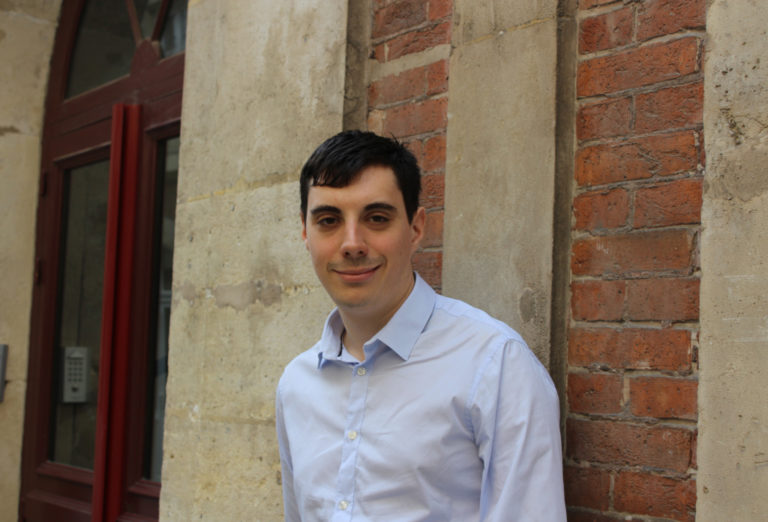
Kyd Shepherd is a psychodynamically oriented clinical psychologist working in Paris, dividing his time between between ESAT (Institute specialised in assisting people with physical and mental disabilities) and private practise. He has a YouTube channel called Talking Psychology where he discusses the theories of prominent psychoanalytic theoreticians.
© Mahan Doğrusöz 2024


