


Mahan Doğrusöz: I’m interested in your journey into psychoanalysis as a person who’s had his background in the hard science of neuropsychology. What ignited your curiosity and led you into psychoanalysis, which is either ignored or seen as ‘passe’ in many scientific circles as far as we can see in the world today?
Mark Solms: I studied neuropsychology because I was interested in the mental aspect of the brain. The thing that is fascinating about the brain is that unlike any other bodily organ or indeed any other thing in nature, it has subjective experience. In other words, it has a mind. So I thought by studying neuropsychology I would be studying this thing that has a mind. It was the mental aspect that interested me. But I was very disappointed and frustrated. Neuropsychology should really be called neurobehaviourism or neurocognitivism. It studies the functions of the mind, but it doesn’t study experience at all. When I asked my professors when they were teaching me, for example, the memory functions of the brain, I said ‘but why do we experience the memory? Why do we have the experience?’ And they said ‘don’t ask questions like that’. So subjectivity is excluded from science because science aspires to objectivity. But subjective experience, as you know, because you’re busy experiencing it right now, it exists, it’s part of nature. We can’t leave it out and if we don’t study the mind also from a subjective perspective, we will never understand how it works. The brain has the capacity for experience for a reason. It must do something and if we leave that out of account, we’ll never understand how that part of nature works. So it was out of my disappointment and frustration with neuropsychology that I turned to psychoanalysis. Because psychoanalysis studies subjective experience. And very importantly, not only is its method one that is designed to study subjectivity, but also from the study of subjective experience, it has developed a language for what subjects are made of and it’s developed very sophisticated theories about this. So I wanted to bring not only the method but also these concepts and theories into neuroscience so that we could study this aspect of the brain. We could study neurological patients and neurological use, neurological methods alongside psychoanalytic methods, use neuropsychological concepts alongside psychoanalytical ones, so that we could really study the totality, both subjective and objective side of things. That led me to many interesting discoveries, for example, about the brain mechanisms of dreaming and the brain mechanisms of some very complicated neuropsychiatric disorders, like something called confabulatory amnesia, something else called anosognosia, and ultimately to the study of brain mechanisms of consciousness itself. So I have no regrets for having done what I did, even though my professors were horrified and my colleagues were horrified. They said that a neuroscientist studying psychoanalysis is like an astronomer studying astrology.
Mahan Doğrusöz: They were very conservative in that sense.
Mark Solmns: Yes, but I have to say that I was interested in bringing psychoanalysis into neuroscience. But once I have built it, I think it has also been possible to contribute to the development of psychoanalytic theory by using methods other than or in addition to psychoanalytic methods to test our models of how the mind works. And so I think it’s been a two way street.
Mahan Doğrusöz: Are there any figures within the history of psychoanalysis that are your self-objects that shaped your thinking and yourself as a psychoanalyst? And what makes them so special for you?
Mark Solms: I have to say first of all that the psychoanalyst whose work I have focused on most is Freud. And the reason I did that is, first of all, there are so many different schools of psychoanalysis, the only common denominator is Freud. So I thought, well, let me start on the foundations and then we can build up. The other reason I started with Freud is because Freud was a neurologist and so his concepts, his way of thinking and theorizing about the mind is much more easily integrated with neuroscientific ways of thinking about the mind. And so that’s why I focused mostly on Freud.
My training was a Freudian analysis, but it was in England. The British Psychoanalytical Society, of which I’m a member, and the Institute of Psychoanalysis in London, which is where I was trained, it’s mostly a Kleinian society. So I was also very heavily exposed to Melanie Klein and Wilfred Bion. And I think that Bion is an outstanding mind and he had a big influence on my way of thinking about the mind. With the Kleinians, it was important to me to understand what the links were. What aspects of Freudian theory did they develop? So you know, obviously they studied much more primitive mental states and so they developed our understanding of those defensive processes and also of the destructive drive. So as long as you properly understand that this is not a replacement of everything, it’s a development of our understanding of the role of destructiveness. It’s a development of our understanding of more primitive states. And of course, when it comes to technique, it’s a development also of our understanding of the role of countertransference and so on. So I was not one of those who thought, as they do in Britain, you have to be one or the other. I was more interested in seeing how the Kleinian development progressed, aspects of the foundations that Freud laid.
Within the middle group, as they call them the independents in Britain, Winnicott also made a fantastically positive impression on me. The problem with Winnicott was it was very difficult to link Winnicott’s language with the other languages because he just used his own terms for everything. So also a special interest of mine was how can we integrate Winnicottian insights with classical Freudian concepts and with Kleinian concepts. So I know I’m talking about very old and basic figures, but those are the ones who influenced me the most.
Mahan Doğrusöz: They’re not old figures for us as Turkey is catching up very slowly. We always hear about Klein and Winnicott among psychoanalysts today.
Mark Solms: Well, the Kleinians were still very active when I trained, which was in the 1980s. And at the very beginning of the 1990s, there was Betty Joseph. And she made a big impression on me with her focus on what is actually happening in the room. What do you actually observe rather than what you speculate? What do you imagine, what do you fantasize, what do you reconstruct? That had a big impact on my own technique, focusing on what you actually observe, in other words on the transference, countertransference, interaction here and now. Who has influenced me less is Kohut and Lacan. Not because I don’t appreciate them, but I just have less expertise, less understanding of them. I don’t think that you can know everything. So, it’s important to note that I have never really deeply studied Lacan and Kohut. At the relational school of nowadays, I also have studied them less, although it’s very interesting what they’re doing.
As I said, I started with Freud and then I looked at how I relate these other developments to Freud and I think of neuropsychoanalysis as a very integrative approach. We’re trying to bring a different perspective on psychoanalysis, not on anyone’s school, but on the field as a whole.
Mahan Doğrusöz: The psychoanalysts I know are detached from the hard science of psychology, whereas the scientists of psychology I know lack the empathy, the creativity and the intuition to dive into the depths of another person’s psyche, whereas you have integrated the two in yourself. How do you reconcile your ‘scientific self’ with your ‘psychoanalyst self’?
Mark Solms: Well, you know, I think the most important thing is something that I’ve already said to you, which is that subjectivity is part of nature. So it’s not being unscientific to take seriously the subjective side, which means the feeling side. Subjectivity is grounded in feeling and I don’t think that I’m being less of a scientist by taking subjective experience seriously. Now, when you train in psychoanalysis, and when you have an analysis as part of your training, you get to understand what you know, what it’s all about. And you can’t do that without developing compassion for your fellow human beings who are in the same boat as you. Once you’ve understood your own suffering, of course it helps you to understand other people’s suffering. You can’t do psychoanalysis without empathy. I think the major instrument of psychoanalysis is empathy, what the Kleinians called countertransference. The broadened sense of countertransference, as opposed to Freud’s narrow understanding of it. It’s being able to feel what your patient feels and separating out what belongs to me and what belongs to them. So, I see no dichotomy there. And I think, Freud’s great contribution to science was to include psychical reality, which as I say exists. It’s a great enrichment of science to include the subjective experience, but it’s not reducing it to something. It’s an acknowledgement and acceptance and exploration of what it means that this is half of what we can know about what it is, what the human being is.
Maybe I should say one other thing, which is that my interest in the brain began with a childhood experience. My older brother suffered a brain injury and I saw how he was changed as a person. And it affected me and it affected my whole family. So for me, the brain was never just a thing or something of an objective detached interest. For me, I always knew from my childhood that the brain is the person, you know, you can’t separate them. That the person is embodied and the body includes this personal subjective aspect and the consequences for relationships, for self esteem, for everything.
Mahan Doğrusöz: Thanks for sharing this experience. Another question I have is your advice to students of psychoanalysis who are in the training phase to become psychoanalysts. The thing is, I was one of them and I gave up years ago because personally I was utterly confused by the different schools of psychoanalysis which were either detached from one another, or they were hostile schools. What would you advise to young students of psychoanalysis, within the midst of these diverse and even hostile schools within the field?
Mark Solms: I want to say something which doesn’t answer your question first, which is I want to say also to students of neuroscience. Don’t forget why you were interested in the brain in the first place. The brain is interesting only because it’s got this unique property. Don’t let it be beaten out of you by your professors that now you have to start thinking like a reductionist and that you must exclude subjectivity. That’s what interested us in the first place and we must hold on to our youthful interests, that’s what motivates us.
When it comes to psychoanalysis, there are two things to say. The one is that, I already began to say it earlier. My interest has always been how I can link further developments in psychoanalysis to Freud, thinking how any particular theory can be linked to his theory. This enables me to see the bigger picture. Each of the new schools don’t replace the totality. They develop one aspect. I’ve already said to you what the Kleinians did. They studied in particular the destructive drive and its impact on our understanding of psychopathology. They studied children and more ill patients who have more primitive mental organizations but not every patient is so ill. So those concepts mustn’t be generalized to everyone; they arise from a particular focus. Kohut, for example studied narcissism. The whole of the mind is not about narcissism. That’s one aspect of the mind and Kohut develops our understanding of that and its implications for technique. You could say the same about Kernberg. Kernberg studies borderline personality disorder. So his whole theory relates to borderline states. But I’m not borderline, many of my patients are not borderline. Those concepts are extremely valuable but they’re not the totality. So I could go on with all the others. So my advice is to start with Freud, even though it’s old. That is the foundation, and then understand each other theorist as to what aspect of the field that Freud started does this develop.
The other thing I want to say is that all the different schools tried to exaggerate the differences between each other. They’re each wanting to show “Look how new I am, look how different things are because of me.” And I don’t look at it that way. I look at it in the opposite way. I try and see where I can find similarities, where I can translate from this language to that language. Like for example, Freud’s language is a third person language. He speaks about mechanisms, forces, energies, structures. The Kleinian language is the language of unconscious fantasy. So that’s not saying these are incompatible. These are two different perspectives on the same thing. If you describe it from the point of view of being the mind as opposed to looking at the mind from the outside, it’s how I try to map them onto each other. I would recommend to any candidate that that’s what they try and do. They mustn’t see each thing as an island, they must see it as how it develops from the foundations.
Mahan Doğrusöz: I hear you saying that Freud is like the paternal figure, the ‘father’ and all the following figures are trying to differentiate themselves through being very different, whereas they’re just elaborating.
Mark Solms: They’re elaborating, but they’re elaborating aspects. That’s the other thing I’m saying. So it’s two things. The one is that, in order to be able to get an integrated picture, the thing that integrates all the schools is Freud because they all start there. So you need to understand how this relates to Freud. And it’s not to say I want to take it back to Freud, it’s that Freud helps me to understand what this person is doing, what they’re adding. And then secondly, it’s a matter of remembering that they’re only developing aspects. They’re not developing the whole theory, they’re developing aspects of it. So it’s not a replacement of the old theory, It’s an advancing of the old theory in one or another aspect.
Mahan Doğrusöz: In one of your lectures, I heard you say that some analysts act like religious fundamentalists and they refuse to engage with the voices of other schools within psychoanalysis. They’re stuck with a particular theoretical formulation within psychoanalysis and don’t want to hear anything else. Can you elaborate a bit on this?
Mark Solms: I think it’s because our knowledge is very uncertain. Because we study subjectivity, it’s very hard to be sure. If you do experimental science, you can be much more definite about your findings. I think that because our findings are more shaky, we end up as defensive against our uncertainty. We develop false certainties thinking, “No, I know this. I don’t want to think about anything else. This is how it works.” And that’s the most unfortunate byproduct of the fact that we can’t be so sure of things in psychoanalysis. It’s a defense because the knowledge base of psychoanalysis is very uncertain. And so we become dogmatic because we don’t want to admit our uncertainty. I think that’s a very big part of it. Psychoanalysts then start to treat other methods and other approaches to the mind as if they’re the enemy. But I think in fact those other methods and other approaches have a great deal to offer psychoanalysis, because the psychoanalytic method is wonderful for exploring subjectivity, but it leads to very uncertain conclusions. So we must supplement it with other methods. I don’t mean ‘replace it’. I don’t mean ‘reduce it’. I mean ‘supplement it’. You know, there’s that old proverb about the blind man and the elephant that the one who’s got the trunk and the other one’s got the ear. And each one thinks that the one who’s got the tail thinks the elephant is a long thin thing, and the one who’s got the ear thinks the elephant is a flat flappy thing. And the one who’s got the belly thinks it’s a big round thing. But if they join, if they share their observations and compare notes, then they get a picture of the total animal. And I think the same applies to the mind.
And this is why I like so much to link the two fields, the neuroscience with psychoanalysis, because that’s one way in which you can gain more clarity and more precision and more confidence about what we do know and what we don’t know.
Out of all people, psychoanalysts, should tolerate uncertainty, should tolerate diversity, should think about what it is about themselves that’s making them split and project and all of that. But they don’t. It’s really most unfortunate. I like to say to my students that psychoanalysis is not important. It’s about something more important. Psychoanalysis is about the subject of the mind. That’s an important thing. That’s not psychoanalysis. It’s a thing out there that we study. But other disciplines study ‘that thing’ too, from their different perspectives, with their different methodologies. If psychoanalysis thinks what it’s studying is psychoanalysis, that’s a big mistake. Psychoanalysis is studying something outside of psychoanalysis called the mind. And many psychoanalysts make that mistake. They think that what they’re studying is inside of their own discipline, and then that’s narcissism. If you don’t separate the subject from the thing, the object, you incorporate the object into your subjective self, then that’s a narcissistic confusion of yourself with your object.
Mahan Doğrusöz: So what I hear you saying is that psychoanalysts should be able to tolerate the uncertainty within their formulations.
Mark Solms: Tolerate the uncertainty which is inevitable in all science but especially in subjective science. And secondly that they should tolerate the necessity for diverse perspectives upon this thing that we are studying which is the mind. It can be studied in many different ways. And I think that psychoanalysts idealize their one and only method and that’s the most unfortunate and incorrect way of proceeding.
Mahan Doğrusöz: And that sounds very much like religious fundamentalism.
Mark Solms: I’m afraid that’s true. In many ways, Psychoanalysis is like a religion. Well, actually, I want to revise that. It’s not psychoanalysis. It’s the psychoanalysts.
Mahan Doğrusöz: William Faulkner has a famous quote in which he says “The past is never dead and it’s not even past.” What do you think of this quote as a psychoanalyst? Can the present ever be free of the past? When I look at the contemporary schools of psychotherapy, there’s so much focus on the present and the future. Especially pop psychology in Turkey talks about the mindfulness and the ‘here and now experience’. What are your associations on this issue?
Mark Solms: I think one of Freud’s greatest discoveries is how the present is always filtered through the lens of the past. It’s not possible to do it otherwise. And this goes back to what I was saying earlier about different perspectives. We learnt something about how memory and perception work from Freud, from his theories of transference and projection and so on and we’ve rediscovered all those things in the neuroscience. Freud got there first. Nowadays we speak about a predictive brain and about perception being controlled hallucination, and these are mainstream concepts in modern neuroscience. So this is how we see it in neuroscience too. Now that the present is entirely imbued with the past, that we construct our present out of our past. There was a very famous neuroscientist named Gerald Edelman. He wrote a book called The Remembered Present. And I love that phrase. We are living in a remembered present.
Mahan Doğrusöz: Another question I have is the role of classical psychoanalytic therapy in the 21st century. What we observe in Turkey as well as across the globe is that people are looking for quick fixes and short-term solutions in psychotherapy. I wonder, how can, if ever, psychoanalytic therapy flourish in this competitive landscape of quick fix and short-term psychotherapies in the 21st century?
Mark Solms: I’ve written an article which you can get online. It’s freely available. It’s called “Neurobiological Underpinnings of Psychoanalytic Theory and Therapy.” And there I describe in neuroscientific terms why you can’t change the brain quickly in terms of the unconscious memory systems, which everybody now recognizes. This is no longer a purely psychoanalytic idea, that they are preconscious. And there’s a phrase that we use for the unconscious, nondeclarative memory systems. We say that those memories are hard to learn and hard to forget. It just works like that. You can’t speed it up. It’s like saying in medicine, you know, “I don’t like dialysis for the kidney to have to happen every day forever. I want to have just one dialysis session a month for two years.” That’s fine. You can do that. But the patient will die because that’s not taking account of how the kidney works. So likewise, our unconscious memory systems, they don’t change quickly. So I say to people who want to make our work faster, they need to learn how learning works. Learning is a slow business. It takes a whole lifetime to become who you are. You can’t change who you are in a few sessions. So there’s something very important here, which is that it requires an enormous amount of time and effort and work and expense to conduct the kind of treatment that really changes somebody’s life. Of course, nobody wants to hear that, but that’s what it takes. It just will never be otherwise, you know, if you think about how the brain is constructed, how the mind, the personality is constructed. It’s a slow process of accretion. They’re critical periods in early life. You can’t redo those critical periods. So the brain is plastic, but only up to a point. I don’t see how it can be otherwise. It’s clear why people would like it to be otherwise, but it isn’t otherwise.
Most treatments, therefore, treat symptoms. They don’t treat the cause of the symptoms so you’re masking symptoms, by the way, are very important. They tell you what’s not working and if you take away the symptoms and you don’t treat what’s causing the symptoms, the results can be fatal. For example, if you have chest pain upon exertion, it’s called angina pectoris. You have chest pain when you exert yourself. If you go to a doctor and say “Doctor, whenever I exert myself, I get chest pain in my chest.” And she says “Take a painkiller.” That will take the pain away, but you’ll die because what’s causing that is that the heart muscle is not getting sufficient oxygen through the blood flow. So what you need to do is to fix the lack of blood flow to the heart muscle. That’s the cause, and it’s the same in our field. We need to treat what’s causing the symptoms, not the symptoms themselves. All psychopharmacology just treats the symptoms and many forms of psychotherapy focus on changing the symptom and that’s a very wrong-headed approach. In no other branch of medicine, if I may, talk of psychoanalysis as if it was psychotherapy in medical terms, in no other branch of medicine, it is satisfactory to only treat the symptoms. Of course, in some conditions in which we don’t understand the mechanism, all we can do is treat the symptoms, but that’s not a satisfactory state of affairs. I think the reason we don’t treat the causes is because it’s hard. Having said all of that, I don’t want to lose sight of the fact that not everybody’s symptoms are so deep rooted and require such exhaustive treatment. There are people who have little problems and they can have little treatments, but if you’ve got big problems, you need big treatments. And if you have deep problems, in other words, things that go back to your childhood, you’re not going to change them just by tweaking something for 10 sessions.
Mahan Doğrusöz: I understand that for smaller issues, cognitive behavioural therapy or short term therapies would be efficient.
Mark Solmns: Or coaching. You know the people are helped by coaching. People are helped by CBT. If that’s the treatment that they need. You know, if you’ve got problems that you can think about and think through your problems and change your mind. But the problem is the unconscious things can’t be thought about. They have to be enacted in the transference. The patient doesn’t know what they’re doing. They can’t know what they’re doing because it’s unconscious. And as I said, all of neuroscience agrees that vast bulk of our memory systems are unconscious memory systems. In other words, everything we’ve learnt about how to meet our needs in life, the vast bulk of it is unconscious. So you can’t just think your way through it and come up with a better plan. You need a much more thoroughgoing treatment for those sorts of problems. And my word, lots of us have those sorts of problems, but not all of us.
Mahan Doğrusöz: As a neuropsychoanalyst, what’s your stance on the EMDR at this point?
Mark Solms: As I said not all problems have deep seated origins in childhood, Imagine that there’s an earthquake that happens when you’re 50 and it’s traumatizing. So you can treat that in a very simple way, helping the patient to get over the trauma of what happened there with EMDR. But if the way it’s traumatizing for them has deeper roots, it is a different story.
But the problem is, just as I was saying about the different schools of psychoanalysis, once they’ve learned something new about narcissism, they think that they can replace everything else that we know about everything. That’s not true. They’ve learned something new about narcissism. That is all. So the same applies to EMDR. EMDR was developed as a treatment for trauma. It’s very helpful for most people who have suffered a trauma. Anybody can be traumatized. Terrible things can happen at any time and there are certain things which are difficult for anybody to cope with. The loss of a child that, the collapse of your business, the death of your partner or your own diagnosis with a terminal illness. These are traumatic things for anybody and you can be helped. They really do get helped. EMDR is not ‘hocus pocus’ but then they generalize it and now suddenly EMDR is given for everything and everything is misconstrued as trauma when it’s not trauma. So that’s my take on it. I’ve seen the results with appropriate referrals for that treatment. Those patients do very well but then they try to over generalize it. It’s obvious that EMDR is not going to change your life. How can it? It can only change symptoms related to PTSD which is not about your life. It’s about some recent event.
Mahan Doğrusöz: But as far as I understand, if a recent traumatic event touches a deeper chord and mobilizes an underlying trauma, then one needs psychoanalysis.
Mark Solms: That’s what I am saying. It helps most trauma victims, but not all. Because for some people who suffer a recent trauma, what is traumatic about it is not the recent trauma, it’s that it re-evokes something which is much deeper. But that’s not the majority of trauma patients like in the earthquake in Turkey. Only those people who were in trouble already are going to have those troubles compounded by the trauma. But many people will have troubles just from the trauma. And you can help them in a very simple way. Psychoanalysis, as much as I’ve said, we’ll never be able to do it more quickly. It’s not for everybody. There are many people who don’t need psychoanalysis and who can’t use it.
Mahan Doğrusöz:. In one of your lectures you mentioned that we now have the scientific tools to test the theoretical formulations of Freud. And my question is what you think Freud’s take on the developments in the field of neuropsychoanalysis would be with respect to his theory?
Mark Solms: I am obviously biased on this score but I think Freud would be absolutely delighted with neuropsychoanalysis and if you read Freud carefully, you’ll see about forty places where he says one day it will be possible to do this. They just didn’t have the tools those days. Freud didn’t abandon neuroscientific methods because he lost interest in them, it’s because they were inadequate. And his days, the things he was interested in, like what we now call functional neurological disorders, what those days they called hysteria and neurasthenia and so on, there were no tools for studying the functioning of the living brain. So the only way Freud could study it empirically, in other words, the only way he could actually gather data and test his hypothesis was psychological. He said many times that one day these things will be reunited. I think he would have been delighted and fascinated by what we found because we found many very interesting things in neuropsychoanalysis.
Mahan Doğrusöz: How you foresee the future of neuropsychoanalysis? What are the biggest opportunities as well as the challenges in the field?
Mark Solms: So I would say the biggest challenge always was to get legitimacy in both psychoanalysis and neuroscience, because both fields resisted neuropsychoanalysis. Those two fields were sworn enemies. They wanted nothing to do with each other. Anybody who says “I want to try to work in the space between these two fields and unite them,” you’re going to face opposition from both sides. So my biggest challenge was to get psychoanalysts to see that this is a legitimate, valuable development contribution to psychoanalysis, and vice versa in neurosciences. To get my neuroscientific colleagues to see that this is a valid, legitimate, valuable advance of neuroscience to incorporate what we can learn from the psychoanalytical side, that was also my challenge. I think that challenge has been greatly met, but it’s not over yet. There’s still lots of resistance. The main challenge is to get it to be recognized. I would love to see a day where it just goes without saying that we study this part of nature both subjectively and objectively, and we use these tools and these concepts, these methods, as a matter of course. But we’re not there yet.
The biggest opportunity is twofold. The one is that, as I said at the very beginning of our conversation, the brain has subjective experience for a reason. It does something, in other words, it changes how the brain works. It changes what we do. You can’t understand the behavior of the human organism without understanding the role of feelings and of subjective experience in what it’s doing. So if you bring neuropsychoanalysis to bear on the brain, you can’t but learn new things. You will learn new things. So the greatest opportunity is what new light is cast on just about everything in neuroscience by taking seriously the subjective perspective upon it. In neuroscience today, it’s generally recognized that the single biggest question is called the hard problem of consciousness. They recognize this, this is the problem of neuroscience, if not of all of natural science. So neuropsychoanalysis is exactly the way to go about studying the hard problem. And this is what I’ve been doing in my most recent work.
Conversely, or in parallel with that, the great opportunity for psychoanalysis is using all these other methods to test our theories. There’s no end to the opportunities there. And for example, I think I mentioned already, in my early research, I brought neuroscientific methods to bear on our understanding of dreams. And I learnt really valuable new things. when, in 1976, somebody named Allan Hobson, a neurophysiologist in Harvard, gave a lecture at the American Psychiatric Association about what we know about the brain mechanisms of dreaming. After the lecture, there was a vote taken about whether psychoanalytic theories of dreaming are still valid. And 2/3 of the members said no, they’re no longer valid. That was in 1976. I debated Allan Hobson in 2006, years later at a neuroscience conference and on the basis of the new findings, which were neuropsychoanalytic findings, the vote went exactly the other way. 2/3 of the audience said that psychoanalytic dream theory is still scientifically valid. So that’s the opportunity for psychoanalysis, is to be able to demonstrate using other methods, demonstrate to the world that we’re not sucking these things out of our thumbs, that these are very valuable insights into how the human being functions.
Mahan Doğrusöz: My last question is about the role of psychoanalysis as a tool for the resolution of sociopolitical conflicts of our era. I’m thinking about the recent Jewish Palestinian issue. I do not know if you are aware of Vamık Volkan and his contributions in this area? Volkan is a Cypriot Turk, and he grew up in an area in Cyprus where there was a conflict between the Greeks and the Turks so he’s seen combat and he’s seen war. He’s also done a lot of research on how psychoanalysis can really transform these political conflicts in the world today. What would you like to say on this issue?
Mark Solms: Yes, I am aware of him. I think what we were saying earlier about the present carrying with it the past, this is a very important psychoanalytic perspective that you can’t understand present conflicts without understanding where they come from. You have to face the facts, the historical facts of how we got here, what happened that brought us here. And crucially, you have to build into that.
The other thing we were discussing earlier, which is empathy. Remember I said that empathy is the basic tool of psychoanalysis. In other words, not only seeing what I see, but seeing also what the other person sees. How does this look from their point of view? And I think that I have had experience with both of these things because I’m South African, I have lived in a very conflicted society, a very troubled society similar to the sorts of things you were talking about, like the division between Palestinians and Israelis, the divisions between the Greek and Cypriot Turks, Northern Ireland and the Republic of Ireland and so on. So here in South Africa, it was the black and white division. I lived in England for 14 years because it was terrible. But then when democracy came to South Africa, I came back and used my psychoanalytic knowledge to try to understand exactly those in two ways. Not just to understand for myself intellectually, but in my efforts to make a contribution to our society here in South Africa. I use those two tools that I’ve just mentioned to you, trying to face up to the historical facts, not my facts, but ‘your’ facts and ‘my’ facts. And that’s the empathy part of it.
I inherited an old farm which was a part of a whole colonial era. It was established in 1690 and it was taken away from the local people by my people. And so why would anybody be happy about that? But likewise I tried to explain to the people who live on this farm, who are the peasants who live here, who are the descendants of the people from whom my people took it. I said to them “Now we got a problem. I can understand why you think I should give it back. Can you understand why I don’t want to give it back? What are we going to do about that?” You know that’s looking at it from both points of view and looking at the history and this is what I did that on my farm which made us come with solutions. In the South African Psychoanalytic Society, we started groups where a group of us, black and white, just talk about our own first encounters with apartheid when we were little and at some point, during our early adulthood just telling some story about how we experience something to do with apartheid. And then we each said something about how we still experience apartheid today because the shadow of apartheid is very long, it’s still with us. So just sitting in a group like that and hearing how others experienced apartheid. The black, brown, white, rich and poor, just seeing the diversity of different ways in which we have experienced this thing because of the history that deposited us into one or another side or group has been enormously helpful. So it’s not just in theory. I’m saying that it’s on the basis of my own experience that I believe that taking history, facing the facts, the unwelcome facts of history which means the other person’s history too, not only your own version of history and thereby cultivating an empathic attitude towards the other, trying to see it from their point of view. I think these are the two most basic and obvious ways in which psychoanalysis can contribute to conflict resolution.
Mahan Doğrusöz: This is transcending our own narcissism, recognizing the subjectivity of the other, having mutual empathy and reconciliation.
Mark Solmns: You can put it in all sorts of different terms. I’m trying to keep it as simple as possible, but if you think about what I’ve just said, it’s an exercise. It is also withdrawing your projections. You know we live in echo chambers. This is basically just a world in which you only rediscover your own truth all this time. You don’t want to hear the other person’s point of view. But psychoanalysis is about that. It’s about taking seriously what it is like to be this person. You know, I’m trying to understand how they are experiencing it, what it feels like to be them. Why did they see it like that? That’s what I mean.
Mahan Doğrusöz: Thanks so much for sharing all your thoughts and experiences within the field. You’ve been so kind and compassionate.
Mark Solms: It has been my pleasure.
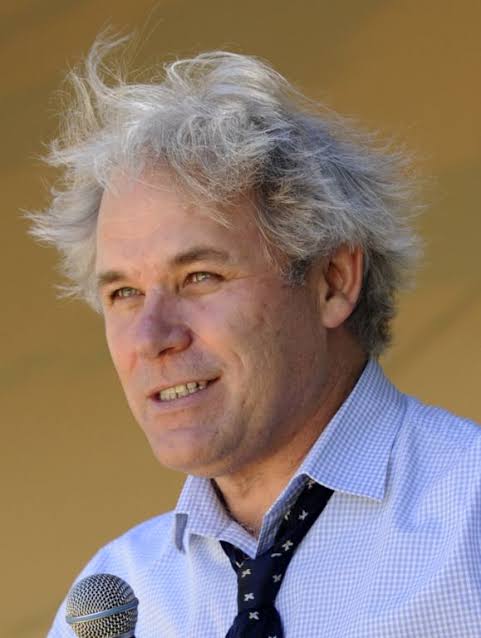
Mark Solms (1961) is a South African psychoanalyst and neuropsychologist who is known for his discovery of the brain mechanisms of dreaming and his use of psychoanalytic methods in contemporary neuroscience. He holds the Chair of Neuropsychology at the University of Cape Town and Groote Schuur Hospital (Departments of Psychology and Neurology) and is the President of the South African Psychoanalytical Association. He is also Research Chair of the International Psychoanalytic Association (since 2013).
Solms founded the International Neuropsychoanalysis Society in 2000 and he was a Founding Editor (with Ed Nersessian) of the journal Neuropsychoanalysis. He is Director of the Arnold Pfeffer Center for Neuropsychoanalysis at the NY Psychoanalytic Institute. He is also Director of the Neuropsychoanalysis Foundation in New York, a Trustee of the Neuropsychoanalysis Fund in London, and Director of the Neuropsychoanalysis Trust in Cape Town. He is a trustee of the Loudoun Trust. (source Wikipedia)
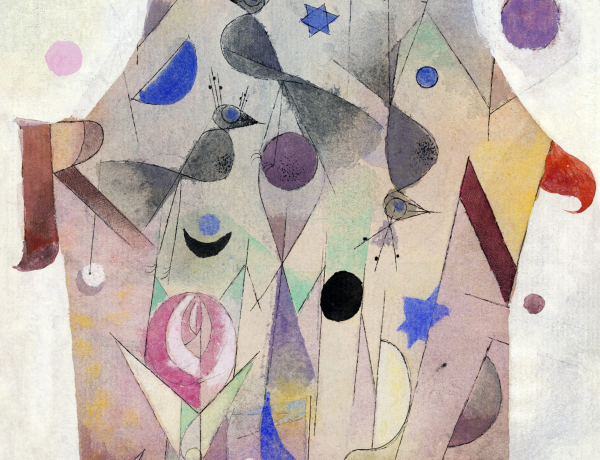
Visual by Paul Klee, Untitled (1914)
Mahan Doğrusöz 2024