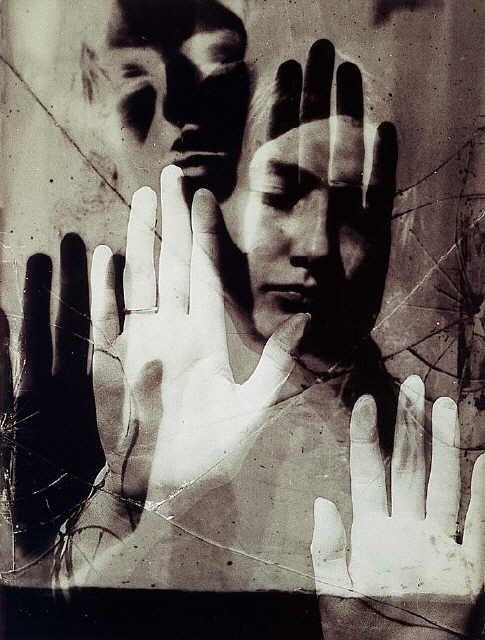



Dr. Rank considered neurosis a failed work of art, the neurotic a failed artist. Neurosis, was a manifestation of imagination and energy gone wrong. Instead of a fruit or flower, I had borne obsessions and anxieties.’
Anais Nin

Anais Nin
The relationship between Anaïs Nin and Otto Rank unfolded in the early 1930s, at a moment when psychoanalysis itself was undergoing a quiet fracture. Rank, once Freud’s closest collaborator and heir apparent, had broken decisively with Freudian orthodoxy. Nin, young, searching, incandescently articulate arrived in his consulting room not merely as a patient but as a writer in formation, porous, hungry, and exquisitely receptive to influence.
What followed was not simply an affair. It was a collision of analysis, desire, authority, and creation.
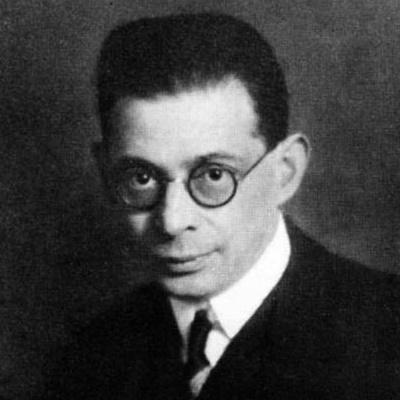
Otto Rank
Rank as Analyst, Rank as Man
Rank’s therapeutic approach already differed radically from Freud’s. He emphasized will, creativity, separation, and birth trauma over instinct and repression. Analysis, for Rank, was not meant to be interminable excavation but a catalyst for becoming.
With Nin, this emphasis proved combustible. He did not remain neutral. He did not hide behind technique. Instead, he entered her psychic world with warmth, admiration, and eventually trangressiona and erotic involvement. In doing so, Rank enacted his belief that the analyst should be human, present, and engaged. But he also crossed a boundary that psychoanalysis, even then, understood as dangerous.
Nin’s Experience: Awakening and Splitting
For Anaïs Nin, the affair was experienced as both liberating and fragmenting. On one level, Rank validated her authorship. He recognized her not as a muse, not as a hysteric, but as a creative subject. He spoke to her mind. He took her work seriously. This recognition was intoxicating and formative.
On another level, the relationship intensified Nin’s already complex relational patterns. She oscillated between devotion and rebellion, between erotic surrender and the need to escape engulfment. Rank became not only a lover but a psychic authority, making separation both necessary and traumatic.
Her diaries from this period reveal an acute awareness of the danger: She knew she was being shaped perhaps too much by the men who loved and analyzed her.
Transference Made Flesh
What makes the Nin–Rank affair so haunting is that it represents transference not interpreted, but enacted.
Rank did not analyze Nin’s desire for him; he entered it. Nin did not metabolize her longing symbolically; she lived it.
This mutual enactment blurred roles irreversibly. Analyst became lover and analysis became intimacy. In psychoanalytic terms, it was a failure of containment.
Aftermath: Separation as Birth
The relationship ended painfully, but not without consequence. Rank’s influence remained visible in Nin’s lifelong preoccupation with birth, separation, and creative autonomy. Yet she ultimately had to free herself from his psychic imprint to claim her own voice fully. Leaving Rank was not just an emotional rupture; it was an act of authorship.
For Rank, the affair further marginalized him within psychoanalysis. His refusal of abstinence, his belief in immediacy, and his personal entanglements placed him outside the institutional future of the field. But history has been kinder to his ideas than to his reputation.

Nin writes about the break with Rank in Fire, From a Journal of Love in which she explicity shares her disaapointment, anger, grief.
Why This Affair Still Matters
The Nin–Rank relationship continues to resonate because it exposes a perennial tension: Can creativity be midwifed without being possessed? Can healing occur without asymmetry becoming exploitation? Can love coexist with analysis or does it always undo it? Their affair suggests no simple answers.
In the face of death, one asks oneself invariably: Did I see enough, hear enough, observe enough, love enough, did I listen attentively, did I appreciate, did I sustain the life? Did Rank die not knowing how much or how deep was his gift, how vivid his human presence?
(The Diary, Vol. III: 1939–44)
It was transformative but costly, illuminating but ethically compromised. It reminds us that when authority and intimacy converge, something powerful is born but something must also be lost. In the end, Anaïs Nin survived Rank by writing and Otto Rank survives, in part, through her.