


Max Weber famously described modernity as bringing about the disenchantment of the world. The mysterious, sacred and magical dimensions of existence gradually retreat before rationalisation. The world becomes increasingly explicable, calculable and manageable.
More than a century later, it is difficult not to wonder whether disenchantment has travelled considerably further than Weber could have imagined.
We measure our sleep, count our steps, monitor our productivity and quantify our attention. Algorithms predict what we might want before desire has quite had time to form. People seeking love are sorted according to preferences and compatibility. Personality becomes data, attention becomes engagement, art becomes content. Even our inner lives have acquired the vocabulary of management: we optimise, regulate, process, identify patterns, establish boundaries.
There is considerable value in much of this. Rationality has liberated us from countless forms of ignorance and suffering. But cultures, like individuals, may lose something while protecting themselves from uncertainty.
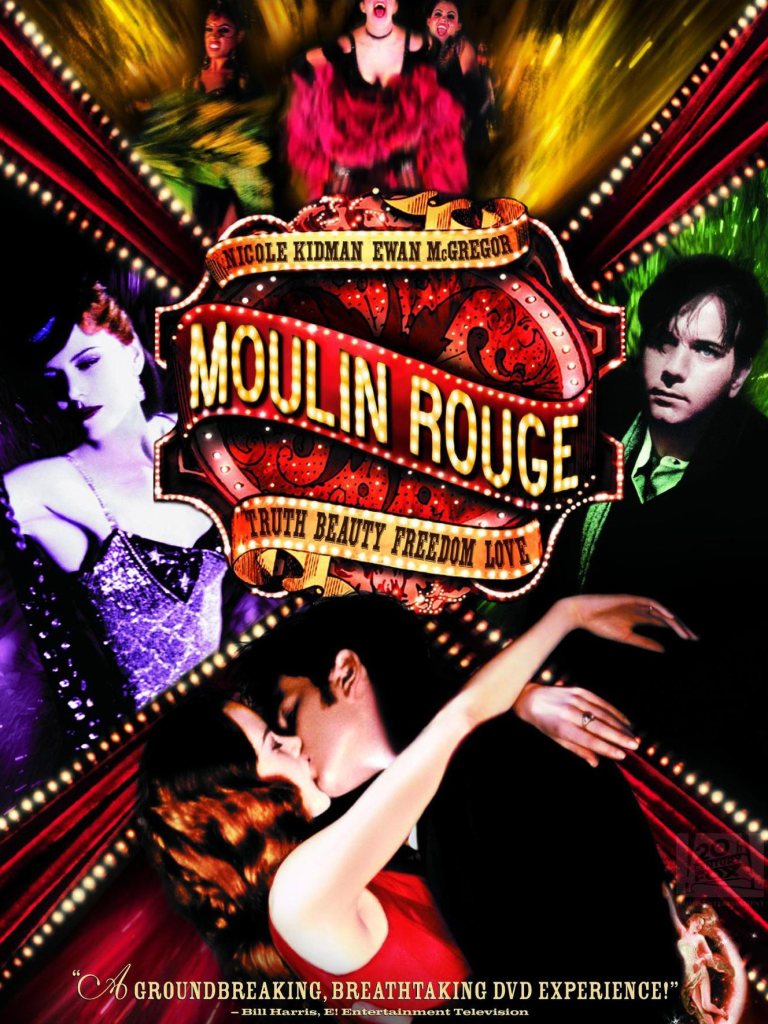
And I increasingly wonder whether what we are losing is our capacity for enchantment. I thought about this recently in an unexpected place: while watching Moulin Rouge! for the first time. Somehow, inexplicably, I had managed to miss Baz Luhrmann’s 2001 film for twenty-five years. When I finally saw it, I was captivated almost immediately. Not impressed. Not merely entertained. Captivated.
It felt less like watching a conventional film than entering one long, extravagant dream. Scenes did not seem to begin and end. Music became dialogue, dialogue became dance, rooms opened onto impossible skies, nineteenth-century Paris collided joyfully with twentieth-century pop music. Reality repeatedly surrendered to emotion. And the remarkable thing was that none of this felt false. On the contrary, beneath all its theatrical artificiality, something felt profoundly true. Perhaps because falling in love has never been a particularly realistic experience.
When we fall in love, the external world does change experientially. One face becomes different from all other faces. A street acquires significance because someone once walked down it. A song becomes permanently attached to a person. Time accelerates, contracts, stops. Ordinary objects become talismans. Geography becomes memory.
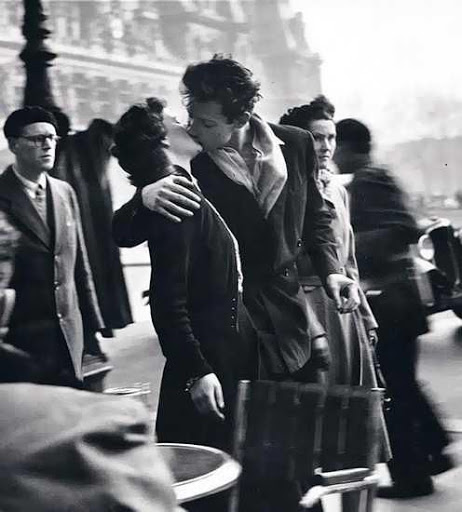
Realism can show us what two people falling in love look like from across the street. Art can show us what love feels like from inside them. Moulin Rouge! reminded me of that distinction.
And afterwards I began thinking about the films that have captivated me most deeply over the years: The Mission, Dead Poets Society, Stealing Beauty, Life Is Beautiful, In the Mood for Love. They are radically different films. Yet I suddenly saw the thread connecting them. They all believe that reality can be transformed.
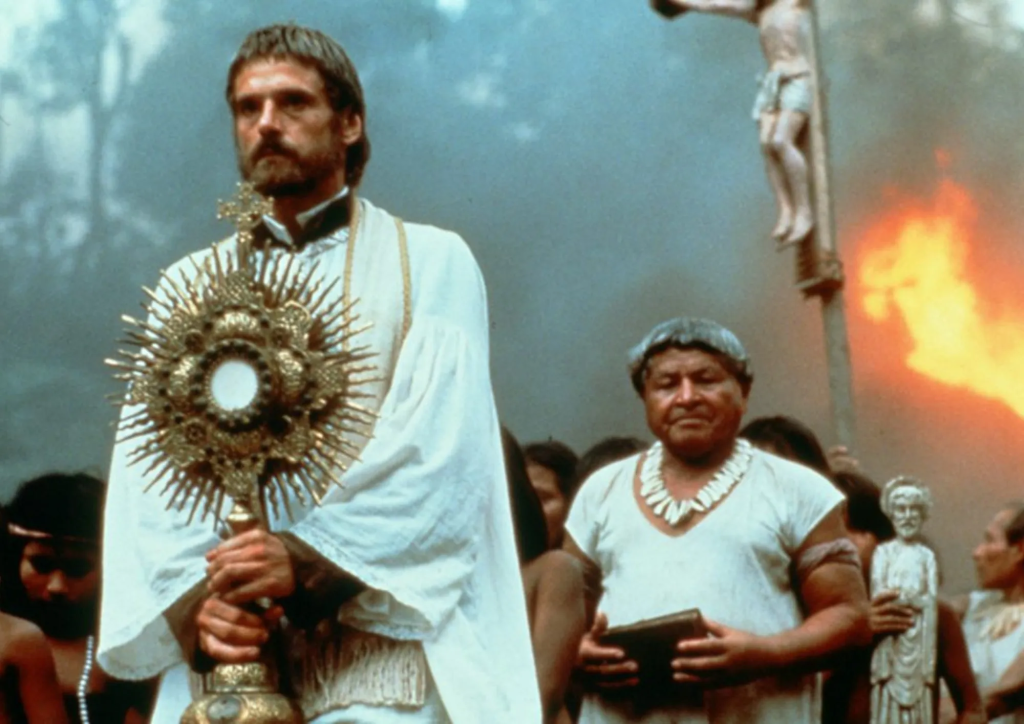
A scene from The Mission
In The Mission, waterfalls, jungle and Ennio Morricone’s music enlarge a human moral struggle until it approaches the spiritual. Dead Poets Society possesses the almost unfashionable conviction that poetry can alter a young person’s relationship to existence. Stealing Beauty allows Tuscany itself to participate in a girl’s awakening to beauty, sexuality and selfhood. Life Is Beautiful places imagination inside historical horror and turns it into an act of paternal love. And In the Mood for Love performs perhaps the most delicate transformation of all: corridors, rain, dresses, repetition and music gradually become longing itself. Very little happens between its lovers but almost everything happens.
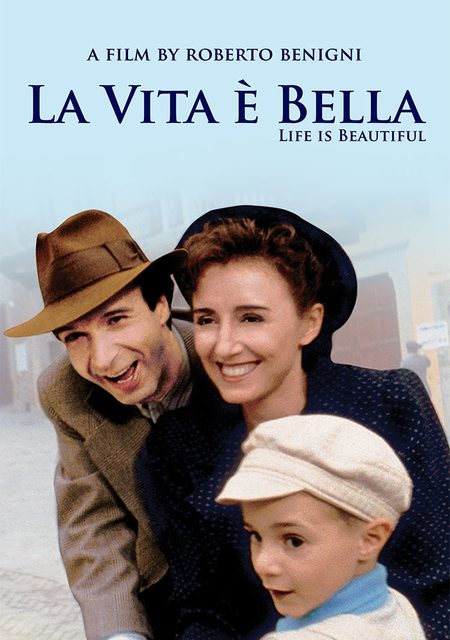
These films do not simply represent experience. They transfigure it. And perhaps that is what I have increasingly missed in contemporary cinema.
This is not an argument that good films are no longer made. They plainly are. Nor is it simply nostalgia for the cinema of another period. The films I love were themselves made across different countries, genres and traditions. What I miss is an artistic disposition. I miss cinema’s willingness to enchant.
Much contemporary prestige cinema seems almost suspicious of transformation. Its seriousness is frequently expressed through restraint: natural lighting, muted colours, sparse music, hesitant conversations, long silences, emotional ambiguity, ordinary interiors. At its best this language can produce extraordinary films. But it has become so culturally authoritative that realism itself sometimes seems to have acquired the status of moral virtue.
And occasionally I find myself asking a rather impolite question. Why should I want art merely to reproduce life? Reality is extremely good at being realistic. Cinema does not need to reproduce it.
At the opposite extreme, contemporary commercial cinema offers unprecedented spectacle. Digital technology can manufacture virtually anything: collapsing cities, imaginary galaxies, monsters, armies, resurrected actors, impossible landscapes. Yet spectacle is not enchantment. This distinction seems increasingly important.
Enchantment does not depend upon technical possibility. It depends upon imaginative conviction. Perhaps this is why my feelings about contemporary cinema have begun to resemble my feelings about contemporary love.
We live in an extraordinarily psychologically literate age. We speak fluently about attachment styles, emotional availability, boundaries, compatibility, red flags and relational patterns. Dating itself is increasingly organised through technologies of selection: preferences entered, possibilities sorted, unsuitable candidates discarded.
Much of this knowledge is useful. But love has traditionally been rather badly behaved. It is inefficient. It disrupts plans. It alters judgment. It makes intelligent people foolish. It gives disproportionate importance to another human being. Above all, it requires a temporary willingness not to stand outside one’s own experience analysing it.
Enchantment requires surrender. And perhaps a culture increasingly organised around self-protection, optimisation and control inevitably finds surrender difficult. The disappearance of romanticism from cinema, our scepticism about great love and even the peculiar difficulty of poetry in contemporary culture may therefore belong to the same historical mood.
Yet the films I love are not embarrassed by the possibility that human experience might require beauty, metaphor and even excess in order to be truthfully represented. Nor are they frightened of sentiment. This may be one of the most striking differences between them and the sensibility of our own moment. Contemporary culture often protects itself from earnestness through irony. Great declarations make us uncomfortable. Romanticism risks appearing naïve. Sentimentality is treated almost as an artistic sin.
Yet the films that remain with me are willing to take precisely that risk. Dead Poets Society believes poetry matters. The Mission believes moral conviction matters. Life Is Beautiful believes imagination matters. Stealing Beauty believes beauty and awakening matter. In the Mood for Love believes that even an unconsummated love can mark an entire life. And Moulin Rouge! believes, extravagantly and without apology, in love.
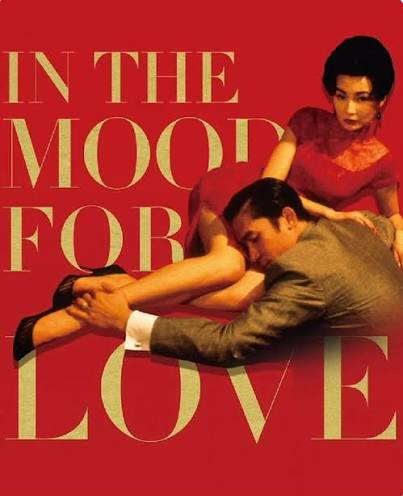
Perhaps it is significant that beauty and loss are so closely intertwined in all these films. The lovers do not remain together. The mission fails. Youth passes. Idealism collides with the world. Satine dies. Beauty is never guaranteed permanence. Perhaps it is beautiful precisely because it cannot be kept. The song ends. The beloved disappears. The child grows older. The house is demolished. A face changes. The curtain eventually comes down. Art cannot prevent any of this. But it can perform one extraordinary act against disappearance: it can transform what is transient into form.
Perhaps that is ultimately why discovering Moulin Rouge! after twenty-five years affected me so strongly. I had not simply discovered another film I loved. I had unexpectedly encountered something I had been missing without quite knowing how to name it: Enchantment.
Perhaps the great challenge for cinema in a disenchanted age is therefore not to become more realistic. Reality has won that competition already. The challenge is to recover its faith in transformation—to risk beauty without embarrassment, emotion without irony, romanticism without apology and imagination without having to justify itself as realism.
Note the video is embedded via YouTube and all rights belong to the respective rights holders.
Visuals are taken from rottentomatoes.com, roxycinemanewyork.com, wikipedia.org.