



The professor told me a couple of days ago if he had lived another fifty years, he would still be fascinated and curious about the vagaries and the variations of the human mind and soul.’
Hilda Doolittle

When we think of Freud, we often picture a figure of abstract ideas: dense theories of the unconscious, repression, and psychosexual development, carefully laid out in books that feel distant, coldly scientific, and almost inhuman. Yet Tribute to Freud invites us to step behind this façade and meet the man himself who is eternally human and utterly embodied. The book Tribute to Freud was written by the American novelist and poet Hilda Doolittle (1886–1961) who has had the chance of meeting Freud and going through analysis with him in 1933-34. The great master was 77 when the American poet was 30 years his junior at the time. She wrote: ‘ I wanted to dig down and dig out, root out my personal weeds, strengthen my purpose, reaffirm my beliefs, canalize my energies, and I seized on the unexpected chance of working with Professor Freud himself. I could never have thought it possible to approach him.’
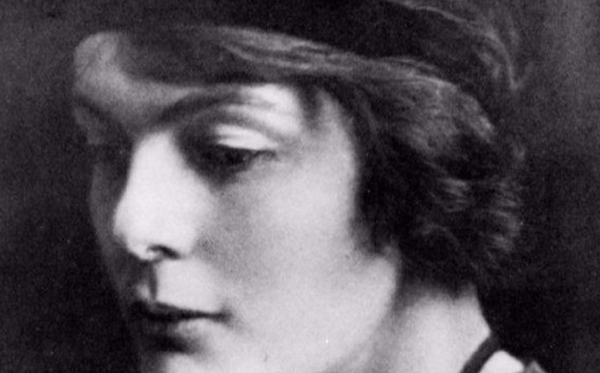
Hilda Doolittle (1886–1961)
The human Freud we encounter in the book is radically different from the man we extract from his theories. We meet a Freud who is fond of receiving gifts for his birthday, expresses his love for gardenias, welcomes his patients into his room adorned with hundreds of personal objects, enjoys art, and loves discussing artistic artifacts, art history, and mythology with his patients. He shares his concern for his grandchildren, reveals his Jewish heritage and is aware that his death is approaching. He is alive, vibrant, fully present, humorous, even theatrical in reciting poets and writers, and writes to his patients to thank them for their gifts. This is a Freud who laughs, teases, worries, and navigates his relationships with his patients with all the contradictions of ordinary life. It is striking to realize that the same mind that mapped the deepest layers of the unconscious was also so human in its habits and emotions. In these details, Freud becomes someone we can recognize not merely a distant theorist but a person whose experiences, struggles, and routines shaped the revolutionary ideas he would share with the world.

Detail from Freud’s Study
This humanized perspective gains even more significance when placed against the history of ego psychology. Mid-twentieth-century analysts often emphasized neutrality, mastery, and technical control, distancing the analyst’s subjectivity from the relational field. In doing so, they sometimes rendered the analytic encounter dry and impersonal, stripping away the intersubjective richness that Freud himself had instinctively embodied. The hyperneutrality of ego psychology made analysis safer, more structured but also colder, more abstract, and less connected to the lived experience of both analyst and patient.

Detail from Freud’s Study
Tribute to Freud reminds us that Freud’s psychoanalysis was never purely technical. It was relational from the start. He understood that unconscious material unfolds not in isolation, but in the interplay between two human beings, the analyst and patient each bringing their histories, emotions, and subtle presences into the space of the session. The book shows how he negotiated neutrality and engagement, intellect and empathy, theory and the messy realities of life with a skill and subtlety that modern relational analysts continue to admire.
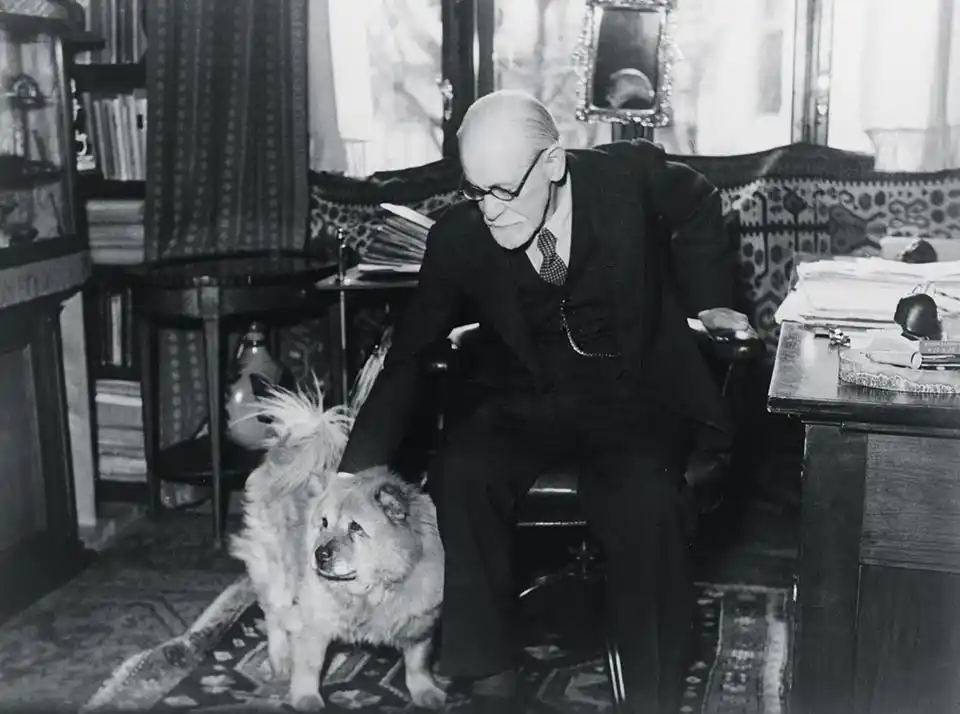
Anna Freud and one of his patients had given Freud a dog which was present even during his sessions
By revealing this side of Freud, the text reconnects us to a dimension often lost in both historical retellings and overly technical interpretations: the deeply intersubjective nature of psychoanalytic work. Freud’s genius was never abstract; it was lived. His insights emerged not despite his humanity, but because of it. Recognizing this allows contemporary readers and clinicians to reclaim an understanding of psychoanalysis as a profoundly human, relational, and dynamic endeavor, one in which interpretation, connection, and experience coexist.

Freud’s Famous Couch
Ultimately, Tribute to Freud is more than a historical or biographical account. It is a call to return to the human side of psychoanalysis, to honor the messy, embodied, emotional complexity of both theorist and patient. In a world that has often prized technical mastery over relational presence, the book is a reminder that the study of the mind is inseparable from the study of human life itself. Freud’s life, as much as his work, shows us that intersubjectivity, empathy, and the lived human experience are not secondary to theory but its very foundation.


