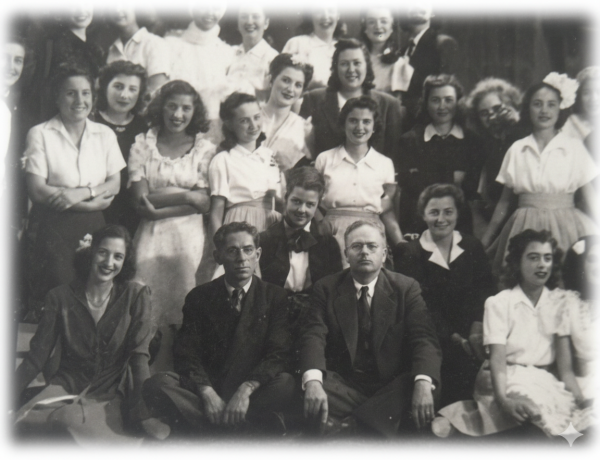



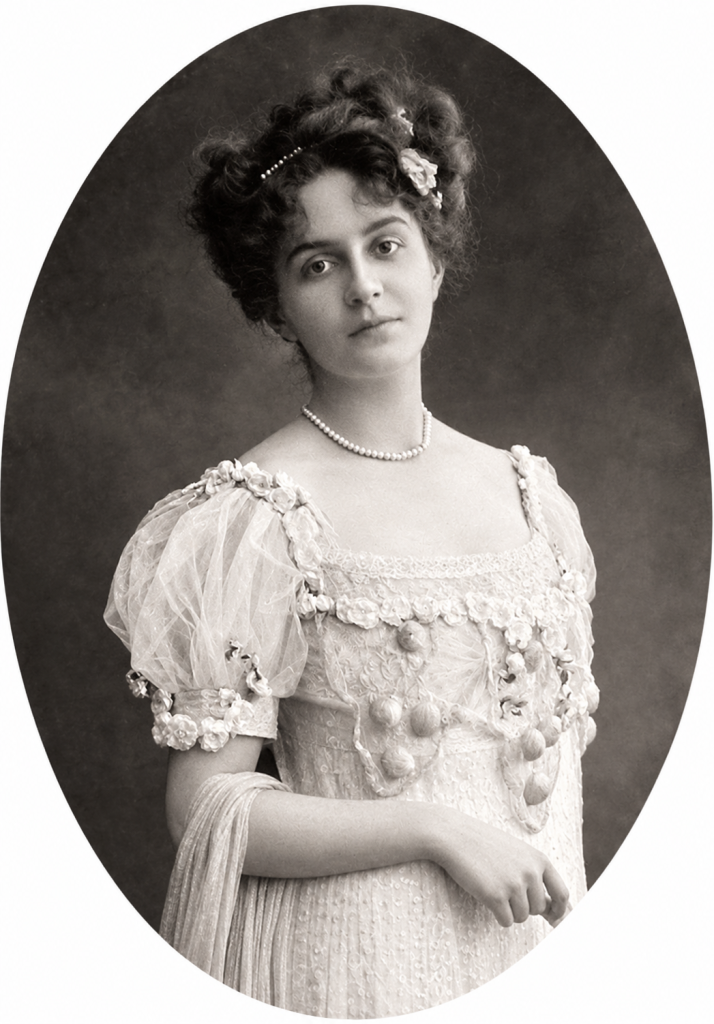
Marie Bonaparte
The relationship between Sigmund Freud and Marie Bonaparte was one of the most remarkable in the history of psychoanalysis. What began in 1925 as an analytic relationship gradually developed into an enduring intellectual partnership, a deeply affectionate friendship, and ultimately a bond that would prove crucial to Freud’s survival during one of the darkest periods of European history.
Marie Bonaparte was far more than Freud’s patient. She became his student, colleague, translator, benefactor, and protector. She helped establish psychoanalysis in France, supported its institutions, and played an instrumental role in securing Freud’s escape from Nazi-occupied Vienna in 1938.
Yet their relationship also reveals a fascinating contradiction. Freud, who had advised psychoanalysts to remain opaque like mirrors and emotionally detached like surgeons, was himself capable of forming intensely personal relationships with his patients and disciples.
The man who helped establish neutrality as a central technical ideal did not always maintain the distance that his own recommendations appeared to prescribe.
The story of Freud and Marie Bonaparte is therefore more than an account of an extraordinary friendship. It offers a revealing glimpse into the human relationships behind the development of psychoanalysis and the tension between Freud’s theoretical prescriptions and his actual practice.
The Princess on Freud’s Couch
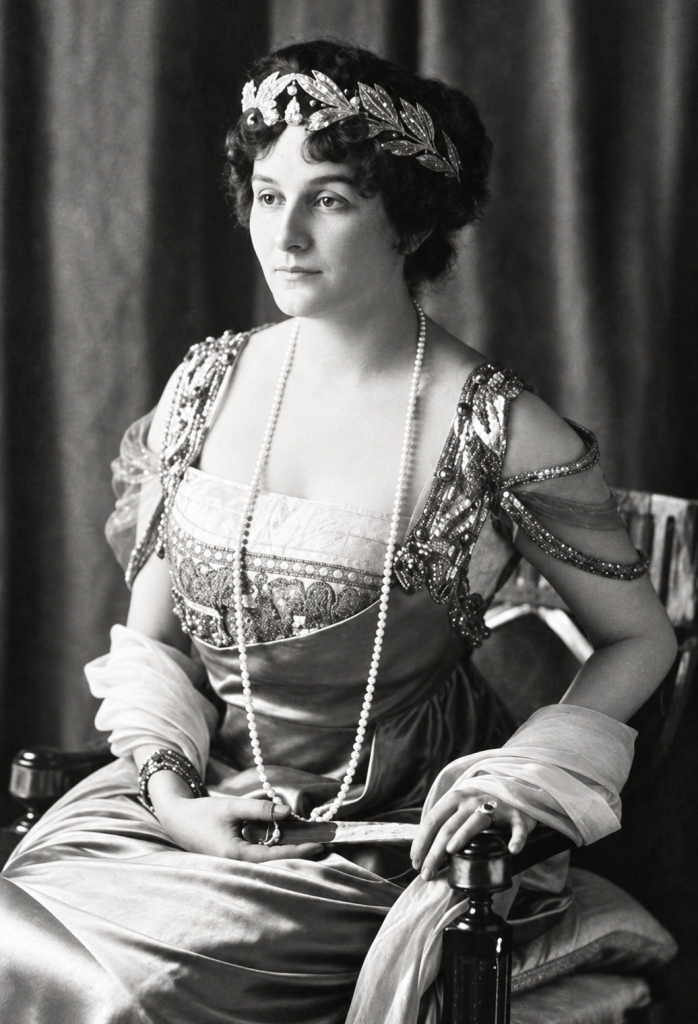
Marie Bonaparte (1882–1962) was a great-grandniece of Napoleon Bonaparte and, through her marriage to Prince George of Greece and Denmark, a member of European royalty.
Born into considerable wealth, she nevertheless experienced a childhood marked by loss and emotional difficulties. Her mother died shortly after her birth, and her early experiences contributed to a lifelong interest in the origins of psychological suffering.
In 1925, she travelled to Vienna to begin psychoanalysis with Freud.
One of her principal concerns was her dissatisfaction with her sexual life, particularly her inability to experience orgasm during intercourse. She was also interested in understanding her childhood, her relationships, and the psychological origins of her difficulties.
Freud was already in his late sixties and suffering from the consequences of the cancer of the jaw that had been diagnosed in 1923. Nevertheless, he accepted Bonaparte for analysis.
Their analytic work continued over several periods and gradually developed into something much broader.
Bonaparte was not content merely to be a patient. She became fascinated by psychoanalytic theory and increasingly committed herself to its study and dissemination.
Freud, in turn, recognized her intellectual curiosity and dedication. Their correspondence reveals a relationship that eventually encompassed psychoanalytic questions, personal concerns, family matters, and the increasingly precarious political situation in Europe.
What had begun in the consulting room was evolving into an enduring friendship.
The Question of Female Sexuality
One of the most revealing aspects of their relationship concerns a question that preoccupied Freud throughout his career: the psychological development of female sexuality.
Bonaparte’s own sexual difficulties led her to investigate the relationship between female anatomy and sexual pleasure.
In December 1924, writing under the pseudonym A. E. Narjani, she completed a study examining the relationship between the anatomical position of the clitoris and women’s experience of orgasm during intercourse. Published in Bruxelles-Médical in 1925, the study reflected an investigation that would continue during her psychoanalysis with Freud.
Bonaparte believed that the distance between the clitoris and the vaginal opening might help explain why some women experienced difficulties achieving orgasm through penetration. Her investigations eventually led her to undergo a series of surgical procedures intended to alter the position of her clitoris. These interventions, including subsequent revisions, did not produce the desired results.
Her experience is particularly significant when considered in the context of Freud’s theories.
Freud had distinguished between clitoral and vaginal sexuality, associating the transition toward vaginal eroticism with mature feminine development. His theoretical framework contributed to the assumption that vaginal orgasm represented a developmental achievement.
Bonaparte’s attempts to resolve her sexual difficulties illustrate how profoundly these assumptions could influence women’s understanding of their own bodies.
There is something poignant about a woman who devoted herself to understanding female sexuality yet subjected herself to invasive procedures in pursuit of an ideal shaped by the sexual theories of her time.
Her experience also exposes one of the limitations of classical psychoanalysis: the difficulty of distinguishing women’s actual experiences from the cultural expectations imposed upon them.
From a contemporary perspective, the absence of orgasm during penetration does not in itself constitute a sexual dysfunction. Clitoral stimulation plays a central role in female sexual pleasure, and the distinction between supposedly immature clitoral sexuality and mature vaginal sexuality is not supported by contemporary sexology.
Bonaparte’s story therefore illustrates both the pioneering character of her investigations and the limitations of the theoretical environment in which she worked.
From Patient to Intellectual Partner
Bonaparte’s involvement in psychoanalysis soon extended far beyond her personal treatment.
In 1926, she helped establish the Société psychanalytique de Paris, becoming one of the central figures in the development of French psychoanalysis. She translated Freud’s writings into French, supported psychoanalytic publications, and used her financial resources to sustain the emerging psychoanalytic movement.
Her intellectual interests were wide-ranging. In addition to her work on female sexuality, she wrote extensively about psychoanalysis, literature, and the relationship between unconscious fantasy and artistic creation.
Her two-volume study of Edgar Allan Poe, published in 1933, applied psychoanalytic interpretation to the writer’s life and literary work. Freud contributed a preface to the study.
Their relationship was no longer simply that of an analyst and his former patient. Bonaparte had become a colleague whose intellectual work Freud supported and whose friendship he valued.
She also developed close relationships with members of his family, particularly Anna Freud. Their extensive correspondence demonstrates how thoroughly she had become part of Freud’s personal and professional world.
Yet it is precisely this transformation that raises an intriguing question about Freud’s own conception of the analytic relationship.
Freud’s Paradox: The Analyst Who Did Not Follow His Own Rules
Freud’s relationship with Bonaparte reveals a striking discrepancy between his technical recommendations and his own clinical practice.
In his 1912 paper Recommendations to Physicians Practising Psycho-Analysis, Freud advised analysts to remain opaque to their patients, like mirrors that reflect only what is presented to them. He also compared the analyst to a surgeon who sets aside personal feelings in order to concentrate on the task at hand.
Elsewhere in his writings, Freud repeatedly employed the metaphor of archaeology to describe psychoanalysis as a process of uncovering the buried remains of psychic history. The analyst, like an archaeologist, was engaged in the painstaking reconstruction of what had been concealed or forgotten.
These metaphors helped establish an image of the psychoanalyst as a disciplined observer whose personal feelings and desires should not interfere with the analytic process.
Yet Freud himself was not always the detached practitioner these metaphors might lead us to imagine. His relationship with Bonaparte is a particularly revealing example. What began as an analytic relationship evolved into a friendship involving personal affection, intellectual collaboration, financial support, and mutual involvement in each other’s lives.
Freud shared his personal concerns with Bonaparte, corresponded with her extensively, and eventually accepted her assistance in securing his family’s escape from Nazi-occupied Austria.
The analyst who had recommended remaining opaque had become an important figure in the personal life of his former patient, just as she had become in his.
Nor was Bonaparte an isolated example. Freud’s relationships with several patients and disciples reveal a man whose personal and professional interactions were often considerably more complex than his technical recommendations suggested.
His relationship with Sándor Ferenczi, who underwent analysis with him, developed into an intense intellectual friendship. Freud also maintained a close and affectionate correspondence with Lou Andreas-Salomé, who studied psychoanalysis with him but was not his analysand.
These relationships suggest that the boundaries between analytic work, intellectual companionship, and personal affection were not always clearly defined within the early psychoanalytic community.
Was Freud’s ideal of neutrality a principle he consistently practised, or was it an attempt to establish a professional discipline whose boundaries he himself was still discovering?
His clinical recommendations may have been more prescriptive than descriptive: an articulation of what he believed psychoanalytic technique ought to become rather than an entirely faithful account of how he himself conducted every analysis.
The paradox is that Freud’s actual practice and professional relationships were often more personal, flexible, and relational than the technical ideal he articulated.
In this respect, his relationship with Bonaparte anticipates questions that would become central to relational and intersubjective psychoanalysis. Can the analyst ever truly function as a neutral observer? Is the analyst’s subjectivity merely an obstacle to treatment, or is it an inevitable part of the therapeutic relationship?
Freud prescribed the mirror, but his own relationships reveal a considerably more human and emotionally involved practitioner.
The Woman Who Helped Save Freud
The defining moment of Freud and Bonaparte’s friendship came in March 1938, following Nazi Germany’s annexation of Austria. Freud, who was Jewish, was now in immediate danger. His apartment and publishing house were searched, and his daughter Anna was detained and interrogated by the Gestapo.
Bonaparte travelled to Vienna in March, determined to help the family. Drawing upon her wealth, diplomatic connections, and position within European aristocracy, she worked to facilitate Freud’s departure from Austria. Her efforts formed part of a wider rescue operation involving Ernest Jones, the American ambassador William C. Bullitt, and other influential figures.
Leaving Nazi-controlled Austria was an extraordinarily difficult undertaking. The family had to negotiate bureaucratic obstacles, obtain the necessary permissions, and meet the financial demands imposed by the Nazi authorities.
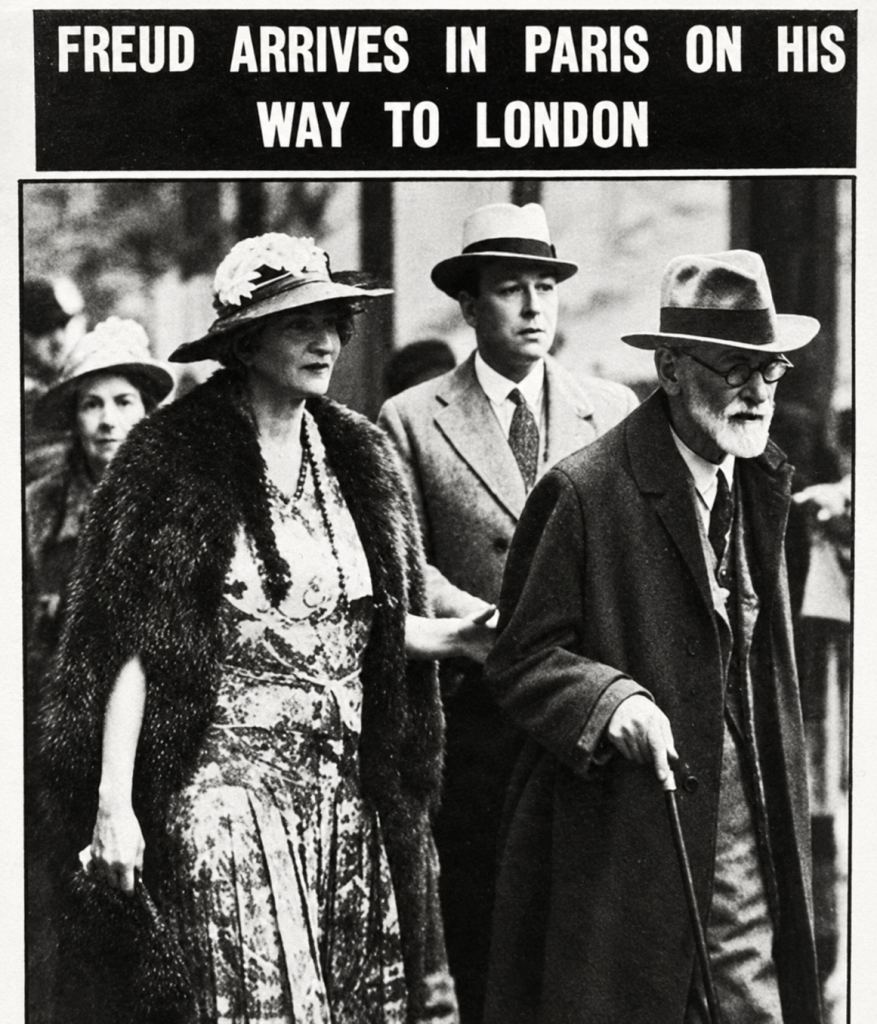
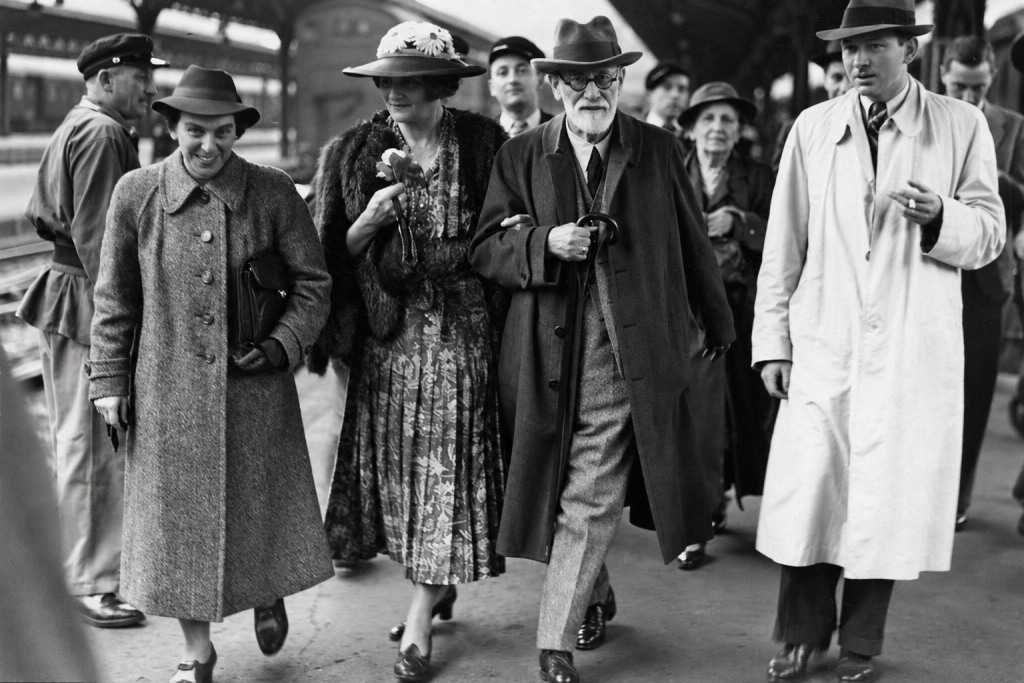
Marie Bonaparte, her husband and Freud
Bonaparte’s assistance was instrumental in overcoming these difficulties. On 4 June 1938, Freud finally left Vienna with his wife Martha and their daughter Anna. They travelled through Paris before continuing to London. Bonaparte welcomed them in Paris, where Freud was briefly reunited with a world that had become increasingly inaccessible to him.
One particularly touching detail concerns Freud’s beloved collection of antiquities. Bonaparte helped preserve part of this collection, including his treasured statuette of Athena, which she brought out of Austria and returned to him. For Freud, whose fascination with archaeology and the ancient world had been a lifelong passion, these objects represented far more than decorative possessions. They were part of his intellectual and emotional world.
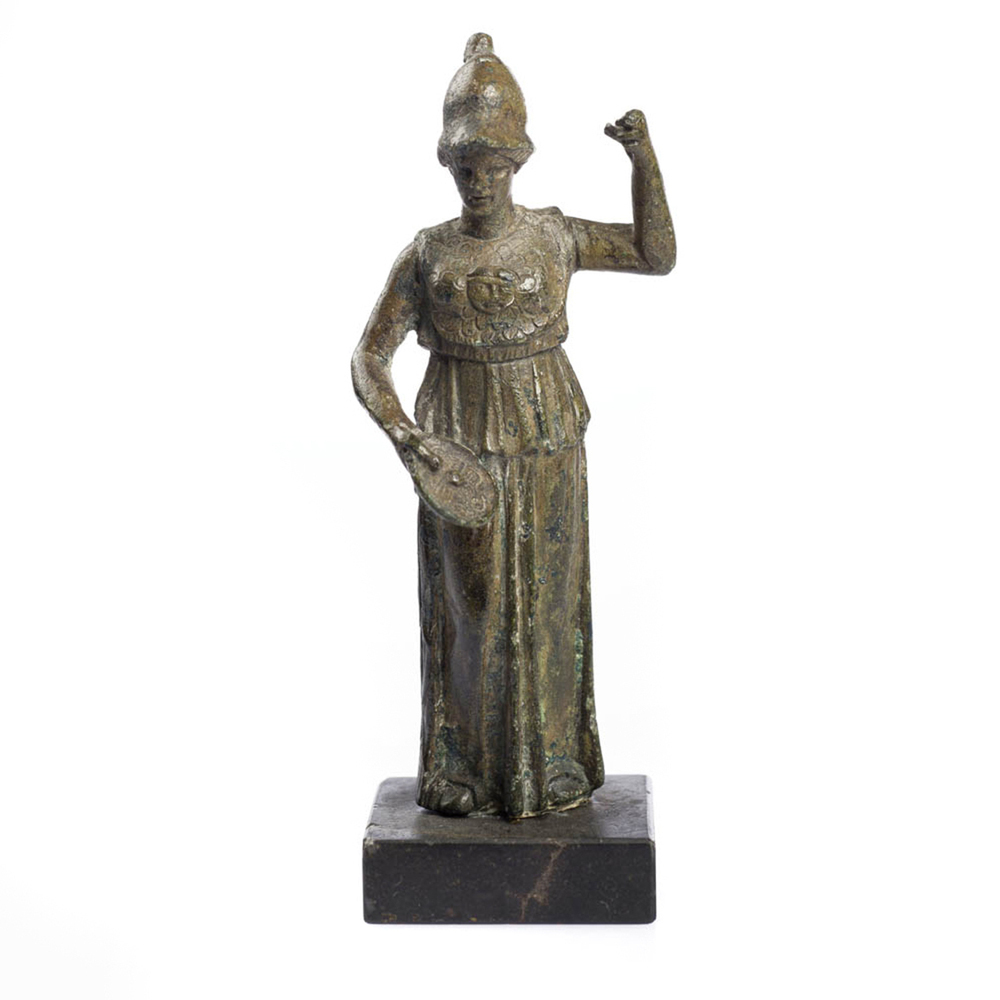
Figure of Athena, taken from freud.org.uk
In helping to save them, Bonaparte preserved something of the life he had been forced to abandon. Their relationship had now undergone a remarkable reversal. The woman who had once sought Freud’s help in understanding her psychological difficulties had become one of the people upon whom his survival depended.
Freud’s theoretical writings established principles that would profoundly influence generations of psychoanalysts. Yet his personal and clinical relationships reveal a practitioner whose conduct was not always easily reconciled with those principles.
Preserving Freud’s Intellectual Legacy
Bonaparte’s commitment to Freud extended beyond his personal safety. In December 1936, she acquired Freud’s early correspondence with Wilhelm Fliess from the Berlin bookseller Reinhold Stahl. These letters, written between 1887 and 1904, document a crucial period in Freud’s intellectual development, including the emergence of ideas that would eventually become central to psychoanalysis.
Freud had wanted the correspondence destroyed. Bonaparte, however, recognized its historical significance and refused to comply with his wishes. Her decision proved enormously important for subsequent generations of psychoanalytic scholars. The letters offer an extraordinary glimpse into the development of Freud’s thinking, his intellectual uncertainties, and the gradual formation of psychoanalytic theory.
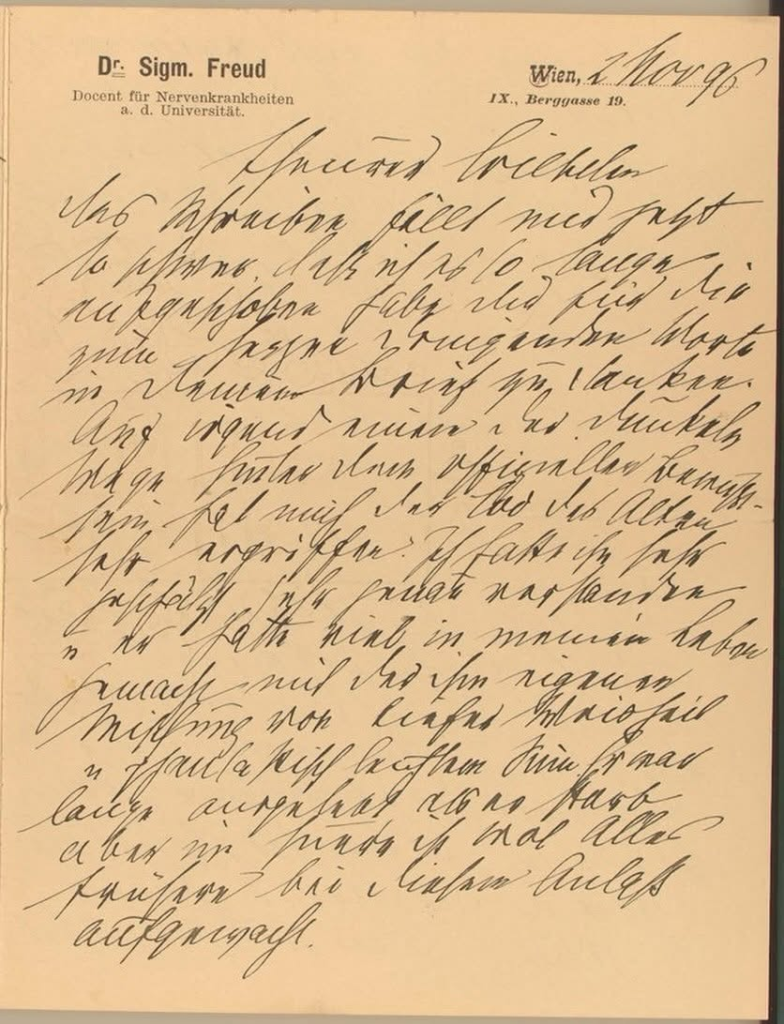
This episode also reveals an interesting dimension of Bonaparte’s relationship with Freud. Although she admired him profoundly and remained committed to his intellectual legacy, she was not entirely submissive to his authority. When she believed that preserving the letters was more important than respecting Freud’s wishes, she followed her own judgment.
Her contribution to the preservation of psychoanalysis was therefore not limited to saving its founder. She also helped safeguard the historical record of its emergence, even when doing so required her to disagree with him.
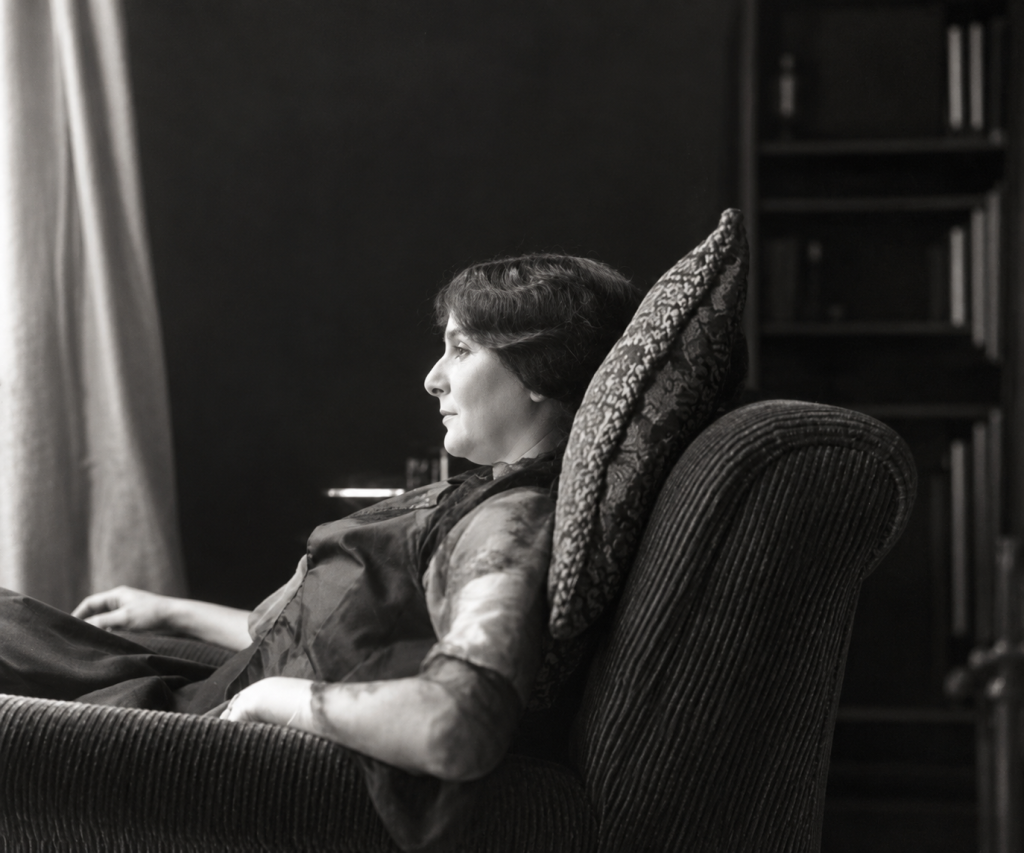
Marie Bonaparte, the Princess of Psychoanalysis
Following Freud’s death in London on 23 September 1939, she continued her psychoanalytic work and remained an influential figure within the international psychoanalytic community.
She died in 1962, having devoted much of her adult life to the development and dissemination of Freud’s ideas. Yet her intellectual contributions have often been overshadowed by her association with him.
Her writings on female sexuality, her psychoanalytic interpretations of literature, and her role in establishing psychoanalysis in France deserve recognition independently of her friendship with Freud.
Beyond the Couch: The Human Side of Psychoanalysis
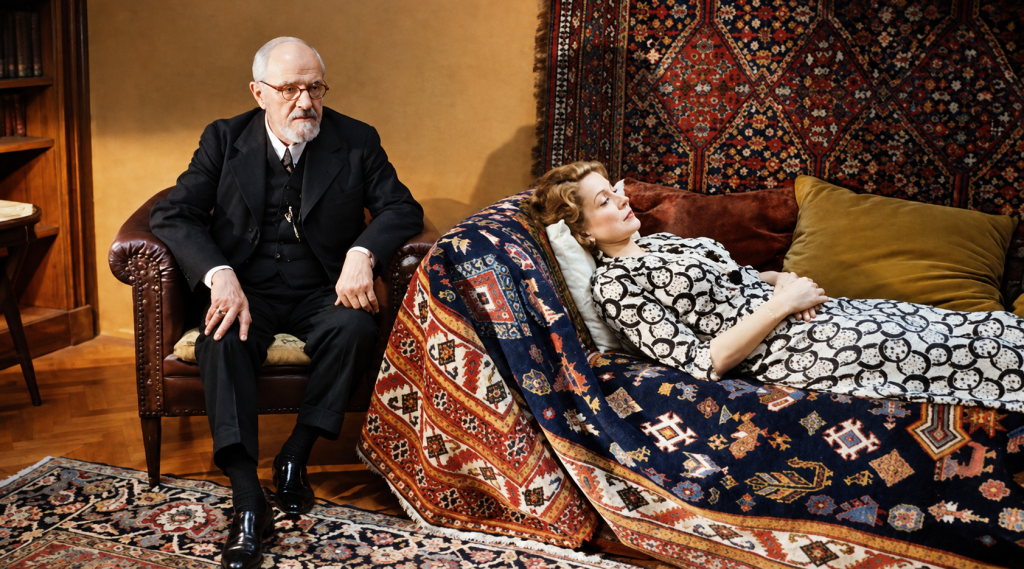
Visual is taken from the movie Marie Bonaparte (https://www.satel.at/en/marie-bonaparte/)
The relationship between Freud and Marie Bonaparte offers an opportunity to reconsider the history of psychoanalysis through the relationships that helped shape it.
His friendship with Bonaparte illustrates this tension particularly well. Their relationship moved beyond the conventional boundaries of the consulting room, encompassing intellectual collaboration, personal affection, mutual loyalty, and eventually a reversal of the roles in which they had first encountered one another.
Bonaparte’s story also challenges the tendency to portray the history of psychoanalysis exclusively through its founding fathers. Women were not merely patients, followers, or recipients of psychoanalytic knowledge. They were instrumental in developing its theories, establishing its institutions, and preserving its intellectual heritage.
Bonaparte herself embodied many of the contradictions of early psychoanalysis. She was intellectually independent yet deeply attached to Freud’s authority. She challenged conventional attitudes toward female sexuality while remaining influenced by some of their underlying assumptions.
Her decision to preserve the Fliess correspondence, despite Freud’s objections, illustrates the independence that coexisted with her loyalty. And when Freud’s life was threatened, she became one of his most determined protectors.
Perhaps the most interesting aspect of their friendship, however, is what it reveals about Freud himself. The founder of psychoanalysis understood the importance of unconscious conflict, transference, and the complexities of human attachment. Yet he was also a man whose own relationships could transcend the technical boundaries he had established.
His relationship with Bonaparte reminds us that psychoanalysis was never developed in an emotional vacuum. Its history is inseparable from the attachments, loyalties, disagreements, and personal experiences of the people who created it.
Freud may have imagined the analyst as a mirror, a surgeon, and an archaeologist. But his relationship with Marie Bonaparte reveals something that his metaphors could not fully capture: the analyst was also a human being, inevitably implicated in the relationships through which psychoanalysis itself came into existence.